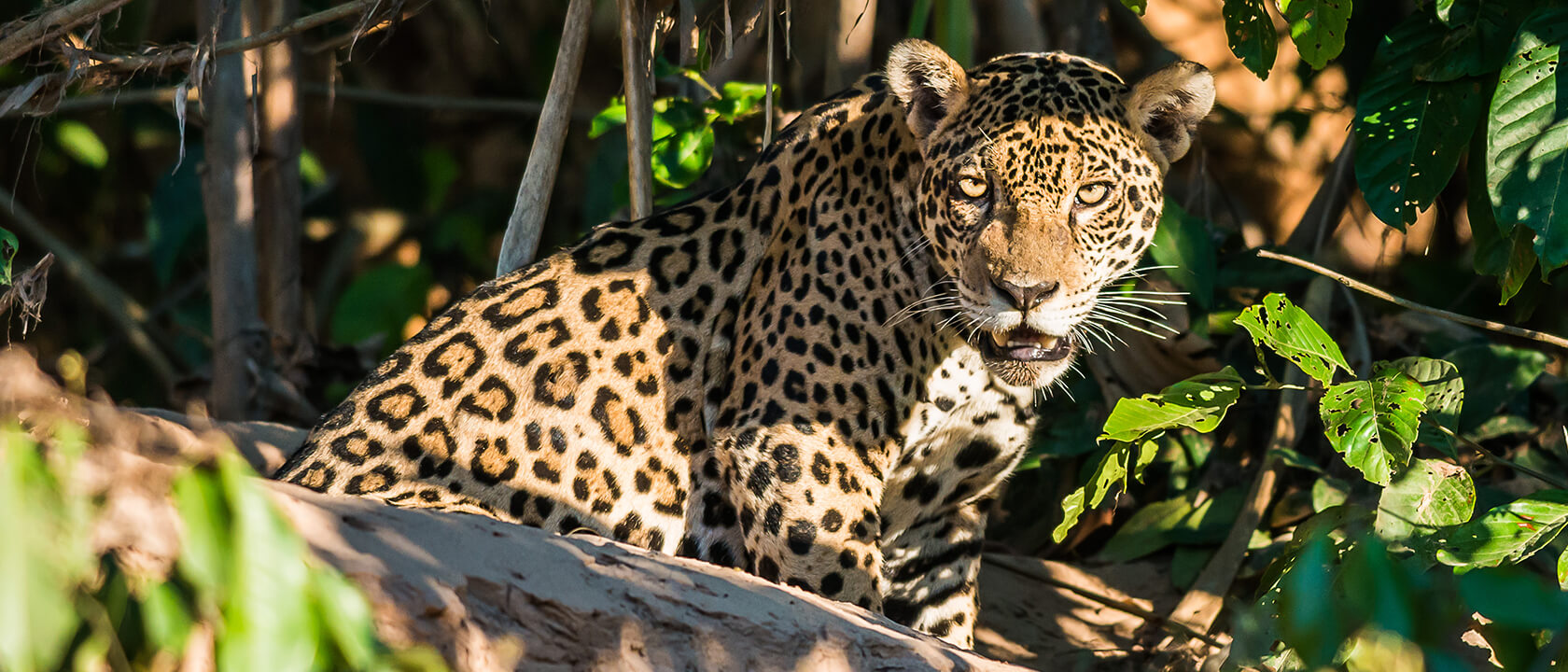
In the Amazon Forest, nothing is adapted to fire. Ten percent of the animal species on the planet live there.
The Amazon Forest, home to one in 10 species on the planet, is on fire. Since last week, nine thousand fires have been burning simultaneously in the vast rainforest in Brazil, spreading to Bolivia, Paraguay and Peru. The fire set intentionally to clear the land for cattle raising, agriculture and logging, was exacerbated by the dry season. The fires represent alarming numbers, with an increase of 80% over the same period last year, according to the National Institute for Space Research (INPE). Fires can even be seen from space.
For the thousands of species of mammals, reptiles, amphibians and birds that live in the Amazon, the impact of fires comes in two phases, one immediate and the other long-term.
“In the Amazon, nothing is adapted to fire,” says William Magnusson, a researcher specialized in monitoring biodiversity at the National Institute for Research in the Amazon (Inpa) in Manaus, Brazil.
In some biomes, such as the Cerrado, forest fires are essential for maintaining healthy ecosystems. Animals are adapted to deal with this, and many even depend on them to thrive. The black-backed woodpecker, for example, native to the American West, nests only in burnt trees, feeding on the beetles that infest the burning wood.
But the Amazon is different.
The rainforest is so exceptionally rich and diverse precisely because it doesn’t catch fire, says Magnusson. Although fires can occur naturally, they are typically small-scale and burn close to the ground. And they are quickly extinguished by the rains.
“Basically, the Amazon hadn’t burned in hundreds of thousands or millions of years,” says Magnusson. It is not like in Australia, for example, where eucalyptus would die without regular fires, he said. The rainforest was not made for fire.
You can continue reading this article at: https://www.nationalgeographicbrasil.com/meio-ambiente/2019/08/incendios-amazonia-animais-silvestres-queimadas-floresta-amazonica-brasil