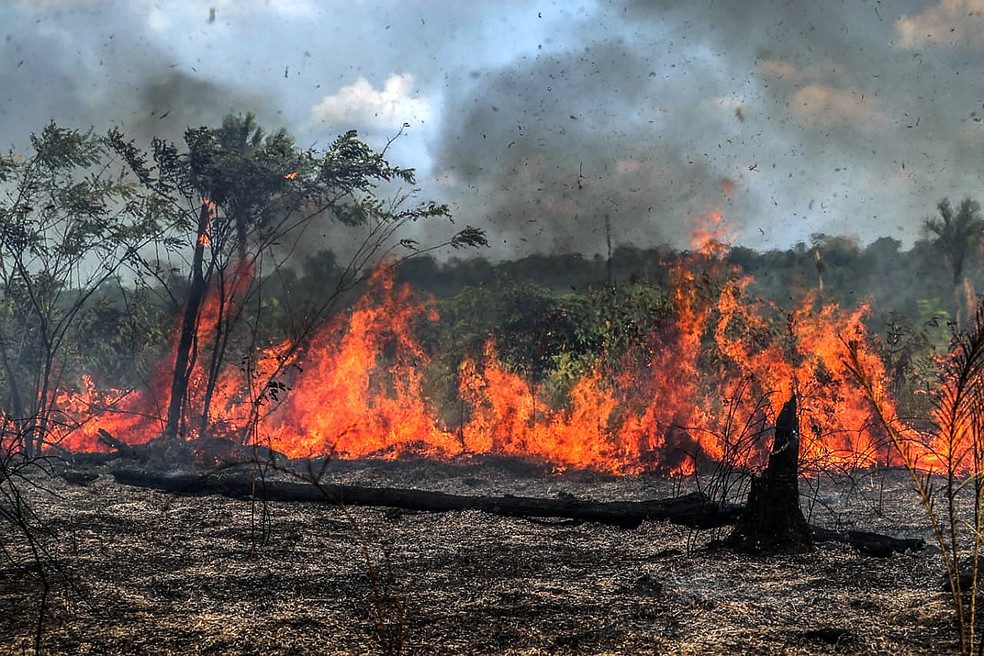
Even with social isolation, deforestation in the Amazon rainforest continues to grow. Loggers and prospectors take advantage of the absence of inspectors due to quarantine and do what they like best: destroy the Amazon.
In the coming months, the felling is expected to be even more significant, not just because of the restrictions imposed by the pandemic. The arrival of drought in much of the Amazon region will also contribute to the destruction of the forest.
According to the National Institute for Space Research (INPE), since the beginning of 2020, an increase in illegal activities has already been detected. The data show that in January of this year there was an increase of 52% in deforestation in relation to the same month of the previous year. In February, this activity was 25% higher than that recorded in the same month of 2019.
Consequences for the environment
We know the consequences of deforestation in the Amazon. By compromising the environment, forest destruction puts the entire planet at risk.
This is because, with deforestation, fires arise. Fire kills animals and vegetation, causing an imbalance in the fauna and flora of the region and the planet.
According to Inpe, the fires that hit the Amazon are linked to the cutting down of trees. In the largest tropical forest in the world, fires bring great damage not only to Brazil and South America but to the planet. This is because both the flora and the fauna are destroyed and are never able to recover.
Covid-19 and increased deforestation
What does the coronavirus have to do with increased deforestation? A lot of things. This is because the pandemic changed Brazil and world reality. To fight the disease and contain the contagion, governments have adopted social isolation.
The legal Amazon region has also prioritized social isolation. This means that several sectors are with their professionals at home or have had to reduce activities to avoid agglomerations.
This is the case with public services and the supervisory body. If surveillance was previously limited, now, with the COVID-19, it has become even smaller.
Aware of this reality, loggers put their saws to work like never before. Economic interests are above any pandemic and they take full advantage of the federal government’s limitations on inspecting different areas of the Amazon.
Deforestation increases the chances of disease
In addition to destroying species and damaging the planet’s balance, the destruction of the Amazon rainforest may represent the emergence of new diseases. According to scientists, the increase in deforestation in the largest tropical forest in the world favors the emergence of diseases capable of being transmitted between animals and humans and which represent more than 60% of communicable diseases. Covid-19 is one of them.
The origin of the coronavirus is Chinese and it is certainly a transmission between animals and humans. According to researchers, the pandemic is likely to have arisen among bats, pangolins and humans. China is not the only country where such viruses can arise. In Brazil, there is also this possibility when deforesting the forest or having contact with wild animals.
According to ecologist Mercedes Bustamante (UnB), South America, especially in Brazil and Central Africa, are the regions of the planet most likely to produce the next emerging zoonoses. According to international models of analysis, Brazil has perfect conditions due to the constant deforestation and the traffic of wild animals.
Forest devastation is not the only concern of scientists and environmentalists. Another major risk of disease arises from accidents at mining dams, such as those in Mariana and Brumadinho, in Minas Gerais.
“It is not yet described in the literature, but the concomitance between the accident and the new occurrence of the [yellow fever] epidemic in the Southeast region makes the interference thesis plausible,” said ecologist Mercedes Bustamante.
Explanation
Scientists and environmentalists explain that human intervention in the forest, as well as the devastation of forests and the killing of wild animals, can release viruses that are released from their hosts, and exposing humans to serious diseases, which can lead to death.
The widespread destruction of the forest has to do with the increased consumption of natural goods and the high demand for meat from wild animals. When we eat meat from these wild animals, we come into contact with microorganisms present in them.
Important in the balance of any ecosystem, wild animals are not the villains of history, but humans who interfere in their habitat. In order to prevent the proliferation of diseases, the most important measure is to prohibit the trade in wild animals and expand inspection in the forest to prevent deforestation.
What to do?
To reduce pandemics caused by zoonoses, experts agree that the first step is to preserve the environment.
Ecologist Mercedes Bustamante recalls that the effects of deforestation in the Amazon are not yet fully understood in the world. Melting glaciers and global warming also contribute to the release of viruses and the emergence of new pandemics.
Another solution to reduce the effects of pandemics is global investments in research related to these diseases in developing countries with a high level of biodiversity.
How does the transmission take place?
- Population increase: The larger the population, the easier it is to spread disease. Reducing clumps is the best way to avoid transmission.
- Lack of infrastructure: This is a major concern in Brazil since the majority of the population lives in precarious locations. Many diseases proliferate in places without basic sanitation, without adequate garbage collection and absence of urban cleaning.
- Confined animals: Birds and other animals in breeding facilities facilitate the spread of contagious diseases. To avoid transmission, breeders need to vaccinate animals and adopt sanitary measures so that humans are not contaminated.
Humanity depends on forests to continue its existence. That is why preserving the Amazon and other environmental areas are essential. Many diseases have arisen and will continue to appear as long as human beings insist on altering the balance of the planet.