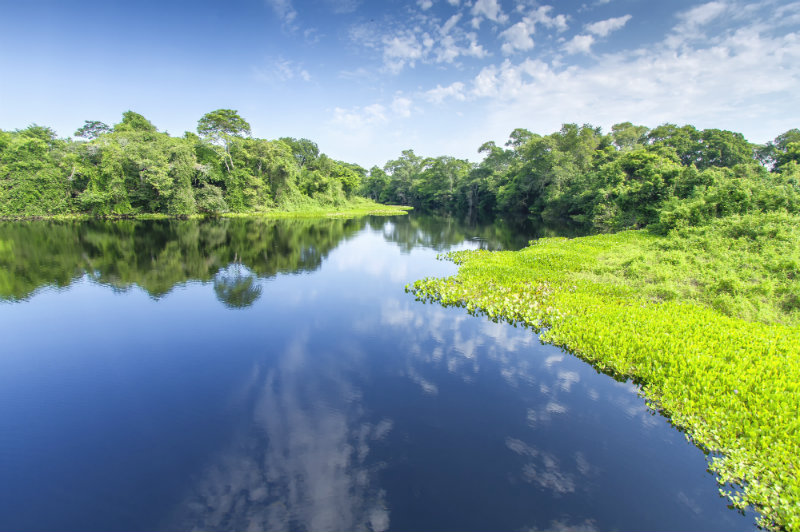
The current crises faced by environmental preservation in Brazil make the population’s awareness of the importance of Brazilian forests urgent.
The Brazilian territory is home to ecosystems such as the Pantanal and a large proportion of the Atlantic Forest, essential for the survival of a wide variety of animal and plant species, in addition to serving as a source of important resources for the social and economic development of the country.
Despite all the relevance presented by these environments, our focus in this article will be the importance presented by the Amazon rainforest for the world scenario.
Let’s see below what makes this forest so important and what are the risks it faces.
Life source
The Amazon is, as many already know, a tropical forest. However, this is not just another forest, but an area that is home to one-third of all tropical forests on the planet. This causes the region to store a large amount of natural wealth of fundamental importance.
Among the greatest wealth concentrated in the region, the following stand out
- Concentration of large amounts of water resources;
- Assistance to control the climatic conditions of the Earth’s atmosphere;
- Shelter for a wide variety of animal and plant species;
- Concentration of cultural wealth of great importance for Brazilian history.
Understand the importance of each of these topics:
The water resources concentrated in the Amazon region include 20% of the planet’s freshwater. In view of the increasing pollution of water and the scarcity of renovation techniques capable of making it suitable for human consumption again, the preservation of natural sources becomes even more important. In addition, the forest has large amounts of water use for other forms of use, such as energy production.
Another factor indirectly linked to forest water resources is Amazon’s capacity to contain fires. The forest vegetation, being dense, high, and capable of maintaining large amounts of moisture, acts as a barrier to the flames that spread from techniques used by agriculture or livestock enterprises. By preventing the spread of fire, forests prevent the uncontrolled flames from reaching even more damaging proportions than those currently presented.
The forest plays an important role in maintaining the climate not only of the region but of the entire planet. Among the functions performed by the forest, are carbon containment, oxygen emission, and air cooling. Thus, the region works to renew the global atmosphere.
The immense number of species that inhabit the region represents half of the world’s biodiversity. In addition to the importance that these species have simply because they exist in harmony with their habitat, they offer great help for the development of biotechnology. Numerous essences and substances can be found in the forest, capable of contributing to the elaboration of pharmacological products, solutions for pest control, among other uses.
Damage caused by deforestation
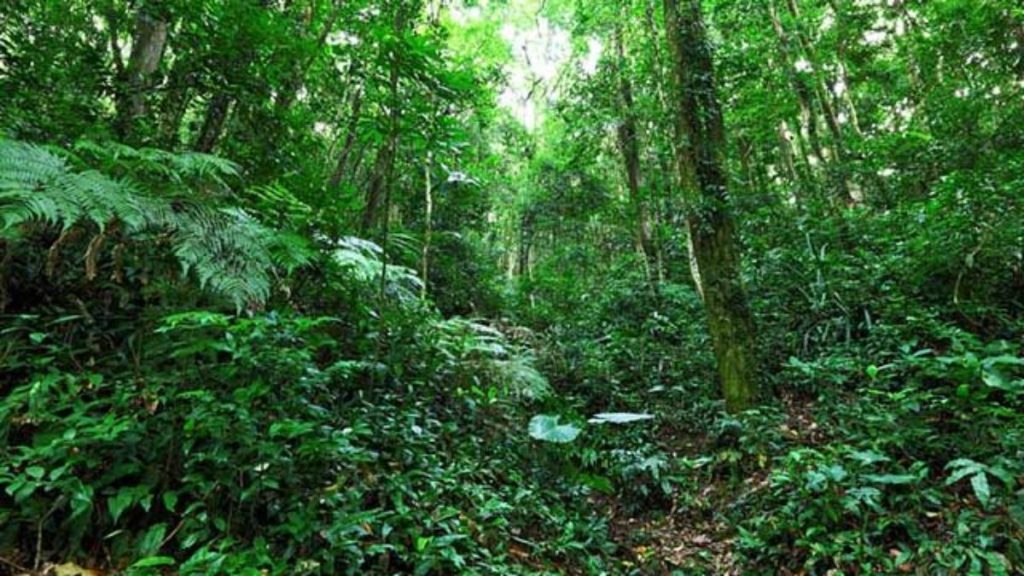
Practical study image
The deforestation of the Amazon forest offers several damages to the global ecosystem. In addition to reducing the forest’s capacity to offer the world all the benefits it is capable of, this deforestation, in itself, causes several other problems.
Fires, for example, are responsible for an immense release of carbon into the atmosphere. All the carbon stored by trees and other plant species is released during deforestation or burning, which causes the global temperature to rise. In other words, the Earth’s atmosphere is polluted at the same time that the only natural resource capable of purifying it is destroyed.
From this point of view, it is not difficult to notice that, according to the advance of the fires and other deforestation actions, the damages caused to become more and more irreparable.
The forest’s ability to contain fires is also impaired through irresponsible extraction of natural assets. Logging, for example, when carried out without due care to reduce impacts, causes devastated forests to be replaced by highly flammable vegetation. So, instead of representing a barrier to burning, these areas further increase the risk that the fire will get out of control.
Political aggravating factors

Image of O Globo
Several other factors add up to damage to the Amazon rainforest, such as illegal miners. The current aggravating factor presented by this situation is the reduction of public policies committed to inspecting the procedures carried out in the region.
The current Federal Government has been making changes and reductions in the inspection systems, reducing their effectiveness. As control over the forest decreases, cases of land invasion, burning, and deforestation increase.
The global pandemic of Covid-19, which reached Brazil in the first half of 2020, makes the situation even more critical for indigenous populations and other inhabitants of places like the state of Amazonas.
As the need to reduce the spread of the new coronavirus took most of the media’s attention and the focus of public investments, the forest became even more neglected and attacked. Current political office holders who have a direct interest in making environmental laws more flexible take advantage of the scenario to pave the way for illegal actions and the advancement of agribusiness.
Among the measures taken, some of the main ones are the drafting of laws that hinder the preservation of forests and indigenous lands reserves and the dismissal of professionals who had a history of involvement in the inspection of environmental crimes.