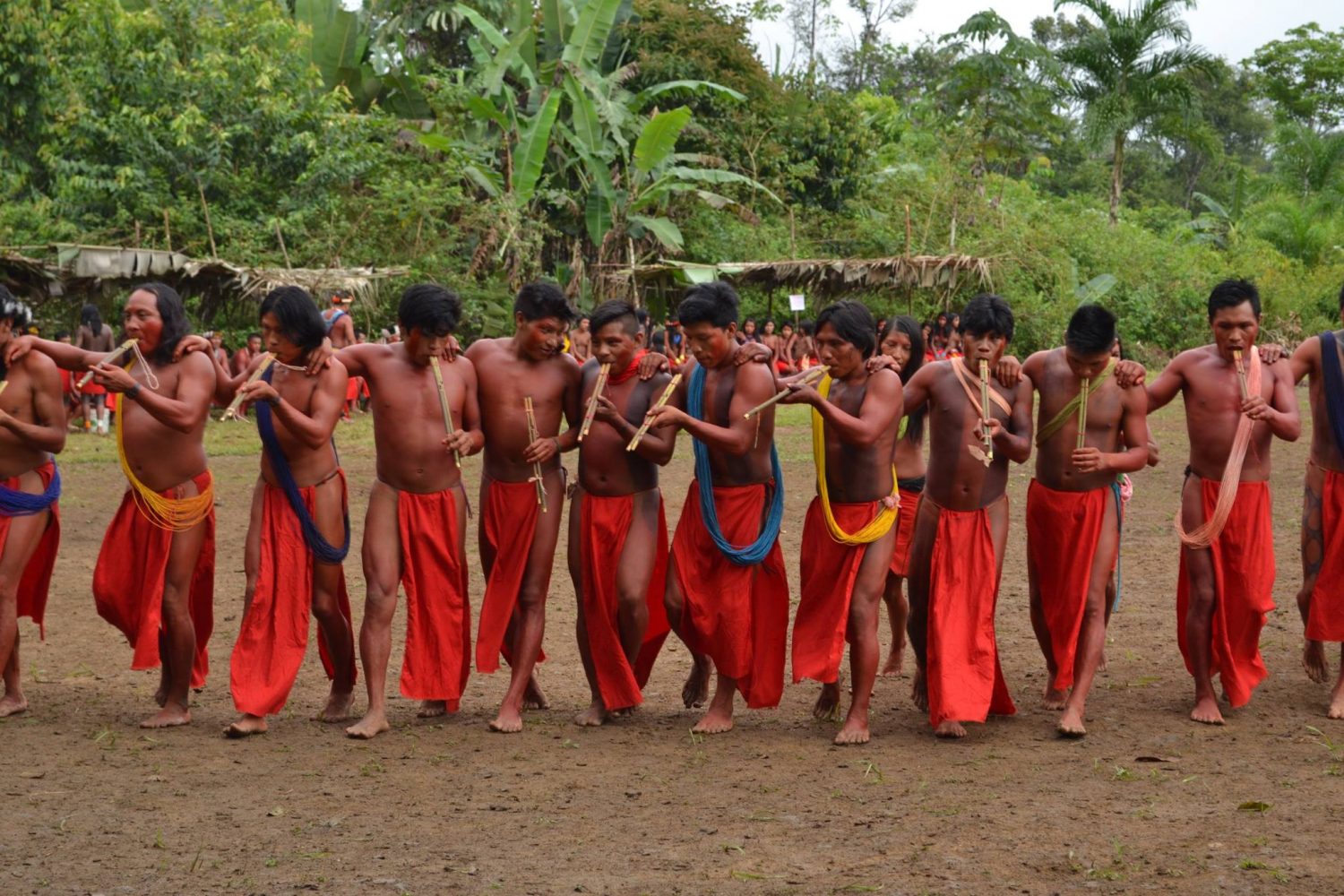
While Brazil is concerned with fighting the coronavirus, the President of the Republic, Jair Bolsonaro, takes advantage of this moment of national vulnerability by the virus to edit a measure that allows the sale of indigenous lands. Normative Instruction No. 9/2020 was published through the National Indian Foundation (Funai), which allows invasion, exploitation, and even commercialization of indigenous lands that have not yet been approved.
The document, published in the Federal Official Gazette, amends the Statement of Limit Recognition, which functioned only as a certification. The declaration stated that private rural property would not invade neighboring properties occupied by indigenous people. With the new rules, this falls apart and the Indians are in even more danger.
According to the lawyer of the Instituto Socioambiental (ISA), Juliana de Paula Batista, the Declaration of Limits Recognition will become a document of possession given to private property owners who are inside unapproved indigenous lands.
The changes don’t stop there. The Normative Instruction also changes the records of the Land Management System (Sigef). The system is an Incra register with official data on the limits of rural properties. Sigef also registered indigenous lands that were approved or in the process of being approved. Now, only approved areas will be recognized by the system. This is yet another way to legalize indigenous tracts by landowners.
Destruction strategy
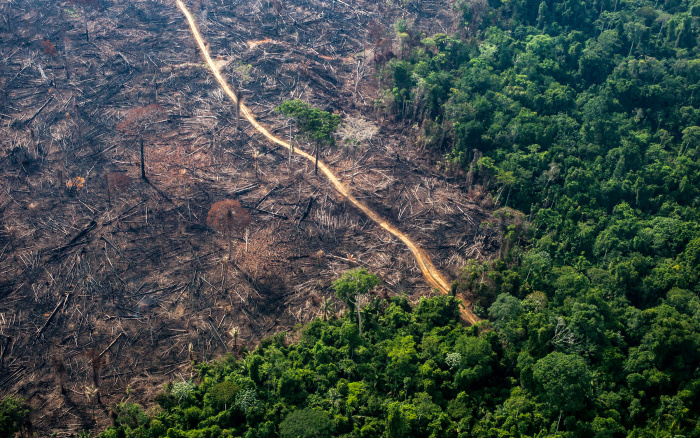
Data from the Instituto Socioambiental (ISA) show that Brazil has 237 indigenous lands in the process of being ratified. Some of these processes were initiated in 1982 and have not yet been completed. With the government measure, any of these lands occupied by indigenous communities will be considered private properties.
“The Federal Government regulations allow indigenous lands not approved to be registered with Sigef as private rural property. In this way, the invader will have the right to sell the property, apply for mining licenses, invest in agriculture and even remove wood from the site, “explained Juliana de Paula Batista, a lawyer at ISA. She also pointed out that the tendency is for more people to buy land without knowing that it is occupied by indigenous people.
But this is not the Federal Government’s first action against indigenous peoples. In February, Bolsonaro sent the bill that regulates the exploitation of land by mining companies and electricity companies to Congress.
Not even the protests of the Indians against the measures were able to sensitize the Executive. Funai’s activities were also the target of the demonstrations, especially with regard to the demarcation of indigenous territories. The Indians also protested the bill signed by Bolsonaro.
Friendship with ruralists
The president of Funai (Fundação Nacional do Índio), Marcelo Augusto Xavier, has a close connection with ruralists. Contrary to what the entity’s statute determines, the current management does not defend indigenous interests, but rather loggers and ranchers.
A former adviser to the special secretary for Land Affairs, Nabhan Garcia, Xavier does not hide his defense of mining exploitation in indigenous lands.
According to the deputy attorney general of the Republic, Antônio Carlos Bigonha, the president of Funai violates the rights of the indigenous people guaranteed in the Constitution. He explains that Xavier incurs a flagrant act of administrative improbity, which can lead to his removal from the presidency and civil and criminal liability.
Exonerations of supervisory chiefs
The government’s attitudes are increasingly demonstrating its true intentions with the Amazon. These actions inhibit inspections in the forest, opening the door to the work of illegal loggers and miners
In April, the Minister of Tourism, Ricardo Salles, and the President of Ibama, Eduardo Bim, dismissed Renê Luiz de Oliveira and the inspection operation coordinator, Hugo Ferreira Netto Loss, responsible for operations against environmental crimes in Brazil.
Ibama managers were exonerated after the disclosure of an operation to close illegal mining. The objective of the action was to protect the villages of four indigenous lands in southern Pará: Apyterewa, Cachoeira Seca, Trincheira, Bacajá, and Ituna Itatá. This did not please the federal government.
The exonerations were questioned by environmental organizations and scholars. The Instituto Socioambiental (ISA) says that the dismissed inspectors were responsible for reducing deforestation on indigenous lands and that there would be no reason to exonerate them. The institute also questions the withdrawal of inspection agents who were fighting gold mining.
Why are exonerations a risk?
- The illegal exploitation of traditional lands will increase,
- Puts Indians at all risk, being easy targets for violent acts,
- During the pandemic, garimpeiros (miners) can transmit the COVID-19 to the villages. According to Unicamp, more than 81 thousand Indians are in a vulnerable situation,
- Further, reduce inspections in the Legal Amazon.
Murder of Indians
The dispute over indigenous lands and the collusion of the federal government has created many problems for the peoples of the Amazon. Without support, they face land grabbers and many are murdered.
Recently, in Rondônia, the Indian Ari Uru-eu-wau-wau was brutally murdered for defending his territory. According to WWF-Brazil, the village Uru-eu-wau-wau has suffered several invasions. The environmental institute believes that land grabbers invade lands encouraged by measures to loosen inspection. In addition, impunity is increasingly recurrent for invaders.
The Indigenous Missionary Council (Cimi) states that the Ari indigenous had been threatened for some time. The victim was part of the indigenous people’s surveillance group and used to report illegal logging within the Uru-eu-wau-wau territory
Funai explains that the crime is being investigated and is available to collaborate with the police.
Important lands
The Uru-eu-wau-wau indigenous land is home to five indigenous peoples: Jupaú (Uru-eu-wau-wau), Amondawa, Cabixi, Oro Towati (Oro win), and three peoples in voluntary isolation (isolated Indians). For this reason, it is considered one of the most important in Rondônia.
In addition to being home to several tribes, Uru-eu-wau-wau is composed of springs from the 17 main rivers of the state, has a rich fauna, with several animals threatened with extinction such as Gavião Real and the dog vinegar. With invasions, vegetation is also threatened. The territory is formed by savanna, dense and open rainforest. In addition to caves with rock inscriptions that will still be studied.