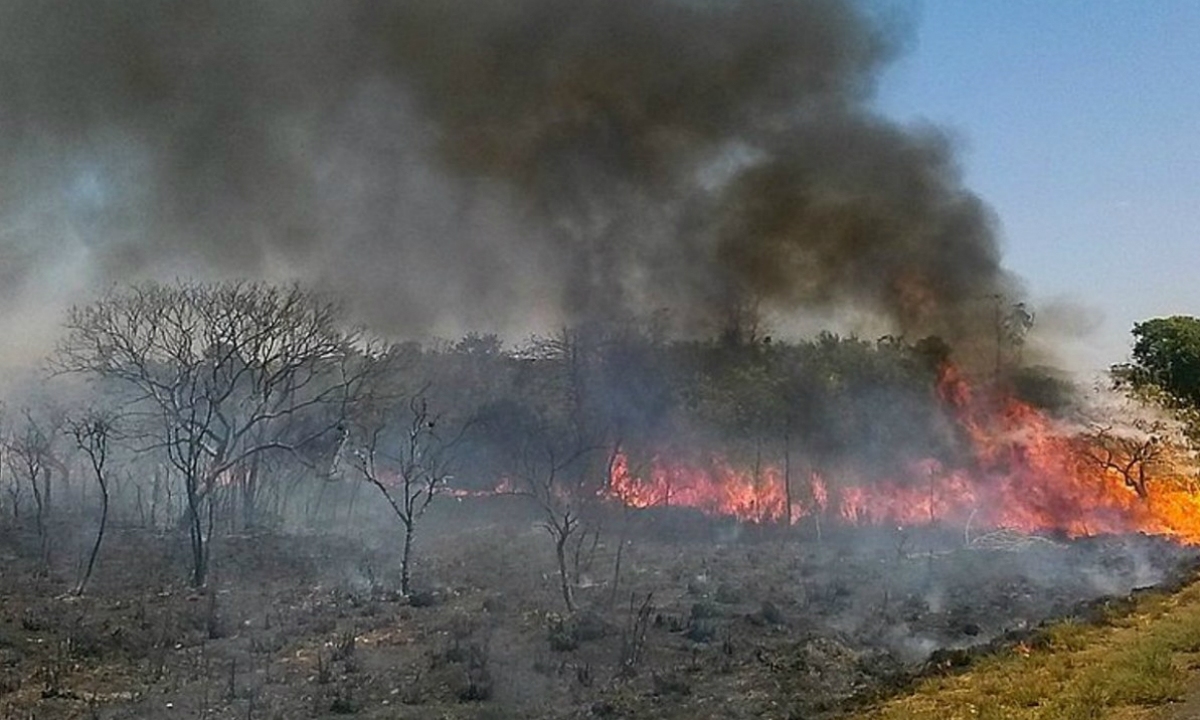
Even the advance of the Coronavirus pandemic was not enough to slow deforestation rates. In the midst of this global crisis, deforestation in the Amazon, once again, breaks a record.
In the month of May alone, it is estimated that about 830 km² was devastated in the Amazon Forest. This alarming rate drew the attention of a group of investors who called for a reduction in the levels of destruction, as this could harm business.
According to these investors, the annihilation of natural resources and, consequently, an increase in carbon emissions, leads to risk in the entire system. This ends up reflecting negatively on the business.
Although with the pandemic, there is a reduction in economic activities, it was expected that the level of deforestation would decrease. However, deforestation has continued and, even worse, has increased.
It, above all, is a direct reflection of the dismantling of the Brazilian Institute for the Environment and Renewable Natural Resources (IBAMA) and the Chico Mendes Institute for Biodiversity Conservation (ICMBio). It can also be said that the omission in the face of invasions of indigenous lands has contributed to the growth of deforestation.
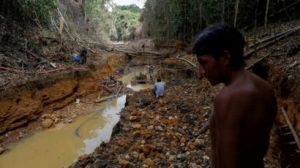
According to the director of the Institute for Environmental Research in the Amazon (IPAM), André Guimarães, this environmental crisis is related to the quarantine decreed since March this year: “I say that, while people and public authorities are concerned with annihilating the virus, the bad guys and bad guys don’t quarantine ”.
On the other hand, André Guimarães says that an increase in the level of fires is expected in this period until the month of August. These are months known as the “fire period” in the Legal Amazon, in which the lands are burned for transformation into the pasture.
This process basically boils down to deforesting the land in the previous year and leaving it to dry. Then next year, those same lands will be burned. As a result, these fires that are taking place this year are generally on lands that were cleared last year.
Therefore, the relationship is logical. As there was an increase in the deforestation rate in this pandemic scenario, it is to be expected that there will also be an increase in the level of fires for next year.
This year, the fire period coincides with the peak of the pandemic. The North Region has the highest number of confirmed cases, followed by the Northeast Region. Manaus, capital of Amazonas, was the first city to declare a collapse in public health.
This makes the scenario more alarming, as the fires themselves end up causing many hospitalizations due to respiratory problems related to smoke inhalation. In such a way, without the pandemic there was already an overload on public health due to these admissions for smoke, imagine with the advance of the pandemic? The situation will be even more alarming!
Experts warn of a double epidemic:
- Coronavirus pandemic;
- Health problems linked to fires.
It is very worrying since the North Region is one of the most deficient in the country and the first to declare a crisis in public health. In addition, a large part of the population lives in places of difficult access, preventing immediate medical care.
As a result, people with the lowest financial conditions will be the most affected. Some factors that justify this greater loss:
- Homes far from large centers;
- It depends on the payment of daily rates generated by informal jobs, such as burning;
- Inappropriate housing locations, among others.
These factors end up making it difficult to comply with the quarantine. And even though the most distant populations may have less contact with COVID-19, in case of contagion, medical access is much more difficult.
Furthermore, the rural population is generally the most affected by the fires, since it is found mainly in the regions most devastated by them. Therefore, it also ends up having a double risk:
- Respiratory problems caused by fires and
- Advancement of COVID-19.
Trump government lenient with the environmental crisis
According to a report by the British Financial Times newspaper, the Trump administration took advantage of the advancement of the Coronavirus pandemic to relax environmental standards from the previous administration, by Barack Obama.
Donald Trump asked his managers to look for acceleration mechanisms in the construction of highways and gas pipelines, which could be contrary to environmental legislation.
In addition, it was reported that the United States Environmental Protection Agency took advantage of the quarantine rules to create less stringent standards for:
- Air pollution;
- Water;
- Use of fossil fuels;
In this context, the National Agriculture Secretariat sent invitations to companies to explore oil and gas in national forests. Car owners were also allowed a higher rate of pollution from these vehicles.
The European Union’s stance in the pandemic scenario
Unlike Brazil and the United States, the European Union adopts sustainable measures in order to escape the economic crisis caused by the pandemic. In this way, economic aid was approved for cases in which renewable energies are used as a way to overcome the crisis.
According to experts, the environmental crisis will have more disastrous consequences than the Coronavirus pandemic itself. What was expected is that the public health crisis would serve as a warning to other nations about the importance of preserving the environment.
But in practice, this was not what happened, especially in countries like Brazil and the United States. These have adopted measures contrary to greater protection of the Environment.
How to mitigate the environmental crisis?
The main weapon in this scenario of environmental crisis is, without a doubt, education. It is essential to have an education more focused on quality and not quantity. Training ecologically conscious people leads to positive long-term results.
The change in the consciousness of the base will undoubtedly train people in the future who are less individualistic and more concerned with the environment. Other measures that should already be adopted:
- Reduction of fires;
- Deforestation reduction;
- Depollution of rivers and springs;
- Water preservation;
- Sewage treatment;
- Adoption of sustainable energy sources, among others.
In this sense, there needs to be a commitment from all countries in the world. Likewise, the adoption of sustainable individual measures is already of great value to mitigate the environmental crisis and, consequently, the collapse of the Environment.
Thus, it is essential that States become aware of environmental issues and environmental preservation. After all, if the pandemic has already been able to damage the world economy and public health, imagine what could happen in the event of a collapse of the Environment!