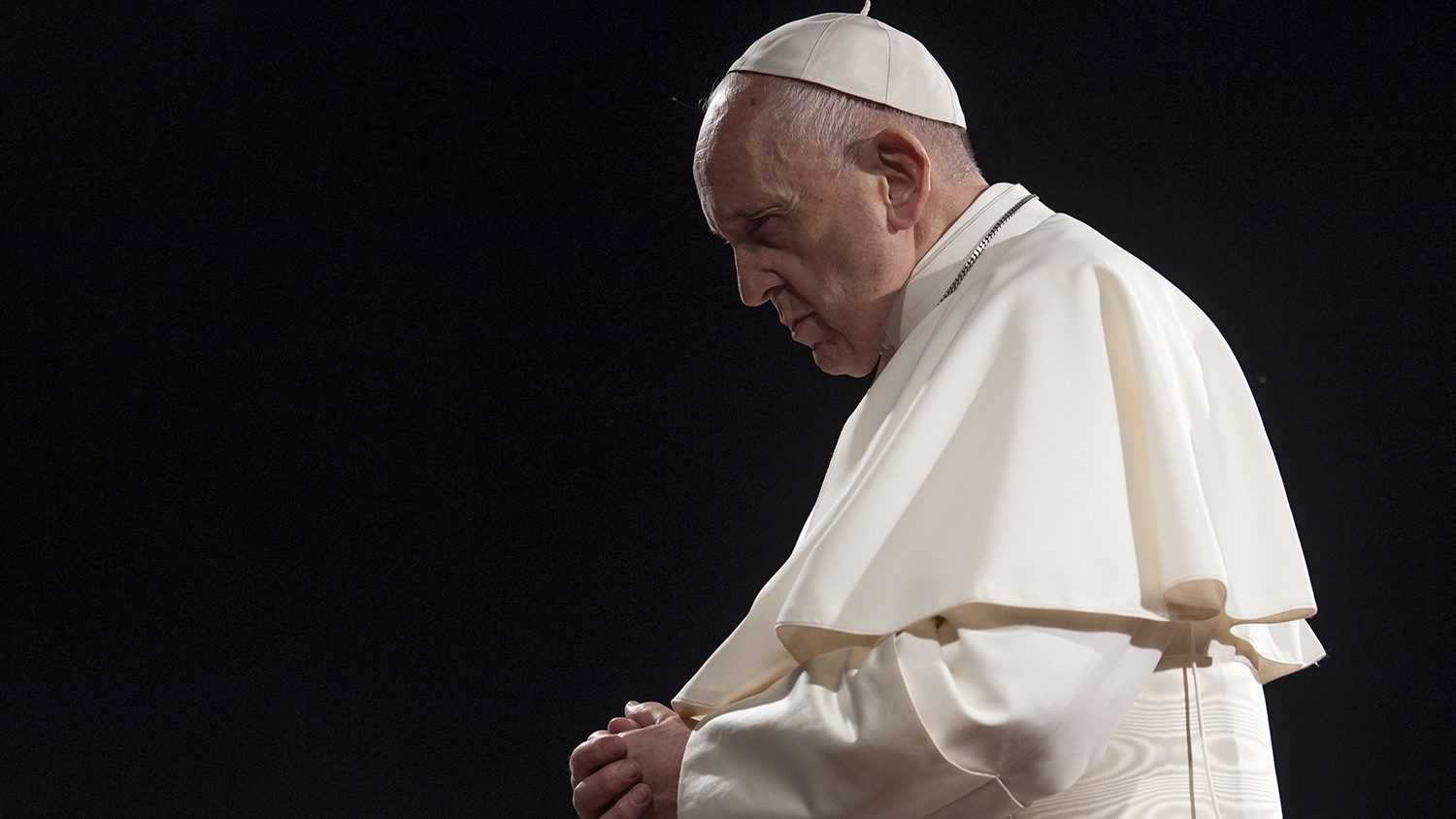
Pope Francis expressed his concern, on Sunday (May 31), with indigenous people living in the Amazon. According to the pontiff, indigenous people are more vulnerable and the arrival of the pandemic can be a great decimator for this population.
This appeal was made in the window of the pontifical apartment, located in São Pedro Square. The head of the Catholic Church interceded for the “Espírito Santo” to give light and care for the indigenous people, who are people who can suffer serious consequences as a result of the Covid-19 pandemic.
Likewise, the pope also interceded in the sense that people are much more important than the economy, so at this point, human dignity has to be placed first.
In addition, Pope Francis showed his admiration for the exemplary work carried out by health professionals in order to combat the spread of the disease. According to him, health professionals give their lives to save other lives.
The pontiff stressed the importance of investing more than ever in health, in the work environment, in the elimination of social inequalities, and in the commitment to eliminate poverty. We need a more humane look towards the whole of society.
This moment, according to the leader of the Catholic Church, is of hunger for hope, of crisis, of wounds, of voids that have not been filled, of pain. Therefore, it is necessary for people to transmit hope and not to discredit in a better future.
Not only is it necessary to combat the virus, but it is also necessary to combat all social ills: hunger, war. It is necessary to return to God’s way. Only everyone walking in the same direction will it be possible to contain the spread of the disease and reach a better world, said Pope Francis
The advance of Covid-19 in the Amazon and the situation of the indigenous people
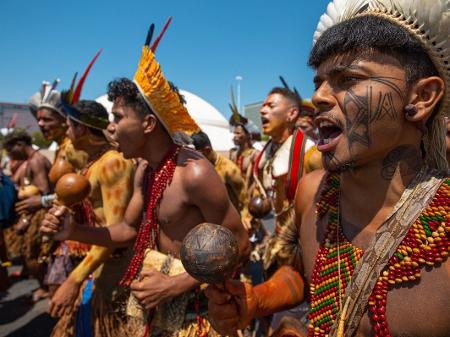
The new coronavirus pandemic has been spreading alarmingly among indigenous populations in the furthest regions of the Amazon. Health professionals have transferred severely ill patients by plane to the only intensive care units (ICUs) in the region.
According to pediatric doctor Edson Santos Rodrigues, who works in the aeromedical transport of Amazonas, “the level of contaminated by Covid-19 increased considerably. We are making many more flights as a last alternative to save lives ”.
Also according to the doctor, sometimes the patient is so weak that there is no time to reach the destination. There are also problems with the landing at night due to lack of visibility, many times, aerodromes do not have the necessary lighting for landings.
On the other hand, Manaus (AM), the capital of the state, is the only city that has intensive care units (ICUs) in the region. According to a report by the Special Secretariat for Indigenous Health (Sesai), 23 indigenous people have already died from Covid-19 (the respiratory disease caused by the new coronavirus). These victims were in distant regions, including 11 were in the border region with Colombia and Peru.
According to the Articulation of Indigenous Peoples of Brazil (APIB), responsible for counting coronavirus cases among indigenous people who migrate to urban areas and are not treated by Sesai, there was an increase in the number of deaths, reaching 103 confirmed deaths.
Of the 540 confirmed cases of coronavirus by APIB, 405 are in the Amazon, mainly in Manaus, which was the first capital to be without available beds. The city’s main cemetery has buried the dead in collective graves.
The epidemic is believed to have started in the city and reached the most remote regions. Therefore, it is necessary that cities begin to isolate and prevent the virus from reaching more and more indigenous villages. Otherwise, many other Indians may die.
Understand how to recover from Covid-19
About 2.7 million people worldwide can be considered recovered from Covid-19, a disease that spread in more than 180 countries and was considered a pandemic case by the World Health Organization (WHO), on March 11, 2020.
The disease transmitted by Sars-CoV-2 has already contaminated more than 6.3 million people across the globe and most of those infected will be able to recover.
China, for example, where the first cases of the disease were recorded, more precisely in the city of Wuhan, after the adoption of serious containment measures, claims that it has managed to contain the disease and stabilize the number of cases.
Brazil has about 560 thousand confirmed cases and 233 thousand recovered. As the mildest cases usually last approximately 14 days, a few days after this period can be considered recovered.
According to the WHO, to be considered recovered, it is necessary, in cases of patients confirmed through laboratory tests, to have two negative results with at least one day between one test and the other. And in cases of mild symptoms, the patient who has no more symptoms after 14 days from the start of the infection is considered recovered.
According to the Ministry of Health, in Brazil, the two WHO criteria are adopted. In this sense, on the one hand, enter patients who were hospitalized by Covid-19 and then underwent two laboratory tests, on the other hand, are patients with mild symptoms and who no longer show symptoms after the period of 14 days from the start of the infection.
In addition, the most appropriate terminology to be used is recovered, as it would only be cured if there were any drugs or vaccines with scientifically proven effective against the virus. Recovered, therefore, refers to a response by the body itself to fight the disease.
The forecast for the arrival of a vaccine against the virus is about two years. But that alone will not guarantee that everyone will be immunized. It is necessary to pay attention, first, to the capacity that the company that produces the vaccine will have to supply the input to the planet.
It is all very uncertain, it is not yet known how long it will take for things to normalize. Even if the virus can be contained, it can cause new contamination, given its high mutation capacity. Therefore, it is necessary to adopt radical measures in order to contain uncertainty.