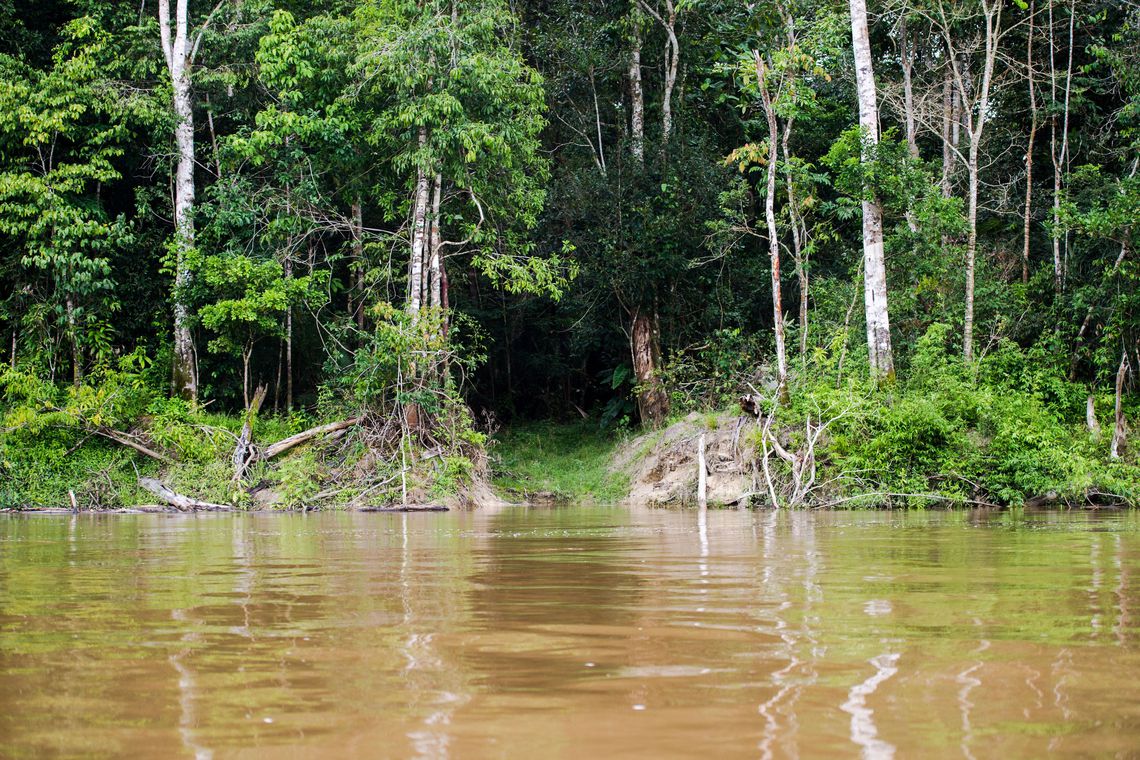
With more than 5 million square kilometers, the Legal Amazon covers almost 60% of the Brazilian territory and is spread over 775 municipalities. If the Legal Amazon were a country, it would be the sixth largest in the world because of its territorial extension. However, this entire magnitude has been under threat for years due to commercial interests. The largest tropical forest in the world suffers from deforestation and constant burning. The main purposes of all this destruction are the expansion of agriculture, land grabbing, exploitation of natural resources, such as wood and mineral wealth.
Just to give you an idea, the fires destroy 128 soccer fields per hour or an area corresponding to the metropolitan region of São Paulo. The comparison gives a clear idea of how much the country is losing from the Amazon on a daily basis. In June 2019 alone, the forest lost about 100,000 football fields. What is worse is that these actions take place mainly in protected areas, which should be untouchable.
Data from the National Institute for Space Research (Inpe) indicate that the states most affected by the fires are Pará (39.56%), Mato Grosso (17.26%), Amazonas (14.56%) and Rondônia (12.75) %). This totals 84% of the deforested Amazon territory.
Deforestation Acceleration
Non-Governmental Organizations (NGOs), researchers and environmental activists have for many years been warning of the growth of deforestation in the Amazon rainforest. In the period from August 2018 to July 2019, according to Inpe, the increase registered was 29.54% in relation to the previous period.
With fires and deforestation, not only the flora is harmed, but also the fauna. Wild and endangered animals are dying due to these actions.
Indigenous peoples are being decimated for protecting their land. Even with all the warnings, there is little inspection, much corruption and almost no punishment for those who destroy the forest with the justification of developing the region economically.
Legal Amazon
Created in the 1950s by the Brazilian government, the Legal Amazon was born with the objective of developing the region in a sustainable manner. Nine states are part of the Legal Amazon, most of which belong to the North region (Acre, Amazonas, Amapá, Pará, Rondônia, Tocantins and Roraima). There are also two states in the Northeast and Midwest (Mato Grosso and Maranhão), covering part of the Cerrado and Pantanal.
The hydrographic basin of the Legal Amazon is formed by the Amazon, Negro, Solimões, Xingu, Madeira, Tocantins, Japurá and Juruá rivers.
Biodiversity is very large in the Legal Amazon. In total, more than 1,300 species of birds, about 500 species of mammals, 378 of reptiles, more than 3,000 species of fish and 400 of amphibians can be found in the forest, in addition to 100,000 invertebrates and 40,000 plant species.
The Amazon is home to about 20% of all species of fauna on the planet.
Figures of the Legal Amazon
- Largest hydrographic basin in the world, with approximately 25 thousand kilometers of navigable rivers.
- The Amazon covers six countries in Latin America: Brazil, Peru, Bolivia, Ecuador, Colombia and Venezuela;
- In Brazil, the Legal Amazon was created with the purpose of developing the region in a sustainable manner. The region is composed of the following states: Amazonas, Acre, Pará, Amapá, Roraima, Rondônia, Mato Grosso, Maranhão, Goiás and Tocantins;
- The territory of the Legal Amazon has 5 million square kilometers;
- The Legal Amazon comprises about 60% of the Brazilian territory and covers 775 cities;
- The Amazon represents more than 67% of the world’s tropical forests. If it were a country, the Legal Amazon would be the sixth largest in territorial extension;
- 20% of fresh water and a third of the world’s trees are in the Legal Amazon;
- The region has 20.3 million residents, according to the IBGE. Of these, 68.9% lived in the urban area and 31.1% in the rural area;
- According to the IBGE estimate, the Legal Amazon is home to 12.3% of the population of Brazil;
- Compared to the total extension, the state of Rondônia is the most deforested in the region. Population growth is one of the factors responsible for deforestation. Between 1970 and 1980, the population grew 324%;
- The Legal Amazon has 30.4 million rural properties. There was an increase of almost 200%, motivating deforestation;
- There was also an increase in land ownership, totaling 35 million hectares;
- In Brazil, the land grabbing territory amounts to 36.7 million hectares, most of which are within the Legal Amazon;
- The Legal Amazon has 67.4 million hectares of federal public land. These lands were occupied without authorization;
- Government estimates show that more than 1.2 million people live in public areas.
What are the possible measures to resolve deforestation and fires?
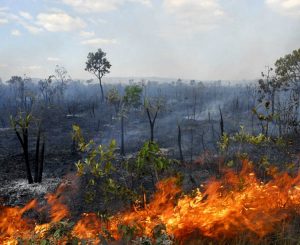
So far, little has been done to protect the Amazon rainforest in Brazil. While international communities demand significant attitudes, the government still demonstrates that the solution is far from happening.
Many measures could help contain deforestation and fires in the Legal Amazon region, especially in areas considered to be protection units.
If the Amazon is extinct, the world will have a big problem. Most of the animal species in the world would be extinct, about 400 indigenous ethnic groups would be in danger, not to mention that the end of the forest would represent a significant increase in global warming. In other words, humanity would also be threatened.
This is because the largest tropical forest in the world helps to regulate the climate and temperatures, not only in Brazil and Latin America, but worldwide. Without it, the current rain system would end and, as a consequence, rivers and seas would dry up.
Among the measures that can save the Amazon are:
- Awareness about the importance of the forest;
- Strengthening of inspection;
- Stricter punishment;
- Public policies for valuing indigenous peoples;
- Limitation of areas for agriculture and livestock;
- Intensive fight against illegal land grabbers and loggers;
- Strengthen sustainable development.
Unfortunately, programs and actions to protect the Amazon have been losing strength in Brazil, which worries the whole world. In times of global warming, which leads, among other consequences, to the melting of glaciers, preserving the forest is more than essential. It is essential for the perpetuation of animal life, plants and human beings.