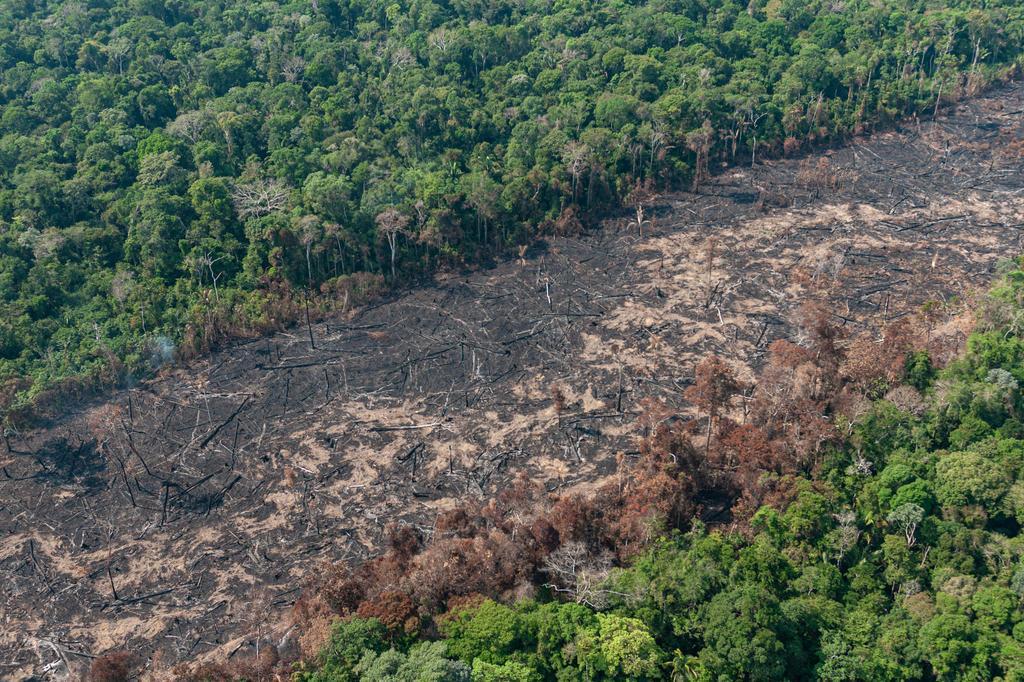
The concern with the deforestation of the Amazon rainforest is worldwide and with each tree, cut increases the risk of destruction of the planet. It may seem like a catastrophic prediction, but, unfortunately, that is what is happening. Human interventions in the largest tropical forest in the world endanger all of humanity, because it destroys biodiversity, favors global warming, and facilitates the emergence of new diseases.
To close your eyes to what happens in the Amazon, especially in its Brazilian part, is to ignore the future consequences. It is exactly these implications that make the Amazon Investment Funds concerned. Increasing warnings about increased deforestation have prompted international institutions that manage the fund to ask Brazil to stop deforestation in the forest.
The appeal was made in an open letter in which international fund managers warned of the dangers posed by the loss of biodiversity and carbon emissions. The document was signed by 38 Brazilian and foreign companies and four sector entities.
Funds from European, Asian, and South American countries fear that the current government will use the COVID-19 pandemic to advance environmental deregulation. Another concern of the fund is the violation of the rights of indigenous peoples.
Suspension of investments

If deforestation continues, large international companies threaten to suspend investments made in meat producers, grain operators, and even government bonds.
The warnings were issued by investors with more than $ 2 trillion in managed assets, such as Finnish Nordea. The companies aim to take global action to protect the largest tropical forest in the world against the excesses of the Ministry of Environment and the President of the Republic.
Companies say they are disappointed with the lack of progress in preserving the Amazon rainforest. That is why they say they stopped buying soybeans and other grains from Brazil, in addition to selling Brazilian government bonds.
Destructive year
According to environmentalists and researchers, 2020 has been the most destructive year for the Amazon. This is because there was a great forest loss due to fires in several locations that make up the Legal Amazon.
To get an idea of the size of the destruction, in just one month a total of 829 km2 of the forest was cleared, equivalent to 14 times the area of Manhattan Island in New York. As a result, we have lost exclusive vegetation from the Amazon and hundreds of species of wild animals. All of this destruction occurred in May, according to satellite data from the National Institute for Space Research (Inpe).
According to Inpe, this year there was an increase of 12% in relation to last year’s deforestation and marks the worst month of May since the records began to be made, in August 2015. According to the agency, in the first five months by 2020 deforestation in the Amazon rainforest has increased by 34%.
For environmental activists, the main responsible for this increase is President Jair Bolsonaro, who encourages the destruction of forests with ineffective public policies, incentives to mining and agriculture, and reduction of inspection. As a result, those responsible for deforestation are entitled to devastate the forest to expand livestock and sell timber illegally.
120 days
In addition to pressure from international funds, the government was also charged by large companies that invest in environmental sustainability. When pressed, the Executive decided in the next few days to suspend the legalized fires in the Amazon region for 120 days. This measure will also affect the Pantanal.
The information was released by Vice President Hamilton Mourão, President of the National Council of the Amazon. According to the vice president, the Federal Planalto should also intensify the actions to suppress illegal fire in the coming weeks, increasing inspection.
Mourão explains that the burning moratorium will allow some exceptions, such as:
- When it occurs by traditional and indigenous communities during the practice of subsistence agriculture.
- For phytosanitary control, as long as authorized by the competent authorities.
Operations to contain loggers
The actions of illegal loggers have taken the sleep of many environmentalists. To inhibit the extraction of hardwood, the Federal Police has carried out operations to arrest leaders of these criminal organizations. Extractions take place on indigenous lands in the state of Rondônia.
About 90 federal police officers operate in the Exodus operation, carried out in several cities in Rondônia: Vilhena, Chupinguaia, Espigão do Oeste, Ji-Paraná, Cacoal, Colorado do Oeste and Pimenta Bueno, among others.
According to the Federal Police, the environmental damage exceeds R $ 50 million, generated from the illegal removal of wood. In total, more than 4,000 hectares of indigenous areas have been deforested.
The objectives of deforestation and fires are to make space for pasture and cattle, giving an aspect of productivity to the area. Thus, the territory is taken, facilitating illegal exploitation.
Indigenous issue
The Indians are the first to feel the neglect of the Federal Government. Deforestation and land invasion are the main causes of the extermination of the Indians, caused by the clashes. But another danger surrounds the villages: the coronavirus.
Several national and international environmental protection entities fear for a genocide of the indigenous population. With the coronavirus pandemic, this finding becomes even more real. The number of cases has attracted the attention of the international community.
The main reason for the increasing spread of the disease in the villages is the abandonment of public entities. There is no inspection to prevent the Indians from contacting invaders, who are often the main responsible for contaminating indigenous peoples. There are not enough doctors or hospitals to provide care.
What you see is scary. According to data from the Amazon Environmental Research Institute (Ipam), the number of deaths per 100,000 inhabitants among indigenous people is 150% higher than the country’s average. The contamination rate is 84% higher when compared to the Brazilian average.
The data are worrying since it points to the extermination of the Indians and shows the Federal Government’s little interest in solving the problem.
All these issues concern environmental and international entities, concerned with the survival of the forest and its peoples.