Inspection focuses on illegal logging in Rondônia indigenous reserve
22 de julho de 2020
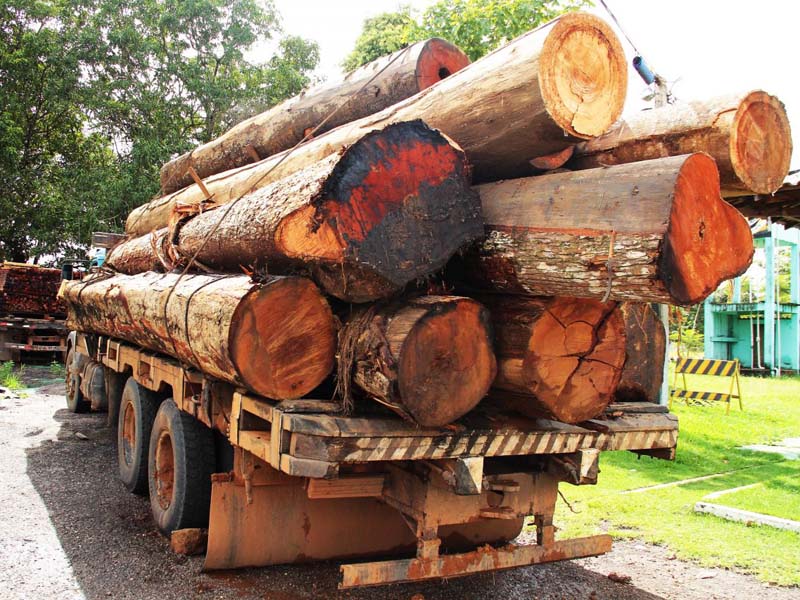
Illegal logging in the states that make up the Legal Amazon is nothing new. Loggers take advantage of the lack of inspection to cut down trees on indigenous reserves and in areas of environmental protection.
In the last week of May, the invaders were surprised by a joint action involving the Brazilian Army, the Federal Police (PF), Ibama, Sedam, Battalion Ambiental, among other partner agencies. The works are part of Operation Green Brazil, which aims to curb deforestation crimes
Rondônia alone, five illegal loggers were targeted for the operation, two in the Extrema district, and three in Nova California. The audited areas are in the Ponta do Abunã region, close to the border between Rondônia and Acre.
According to the Army, this is one of the places that have a high rate of deforestation alerts in the state. Despite the flagrant and evidence of illegality at the site, no one was arrested.
Invasion of indigenous lands
According to the organizers of Operation Green Brazil, most of the logs found in the lumber companies were extracted from the Kaxarari indigenous land, 30 kilometers from the district of Extrema. For five days, environmental inspection teams surveyed the timbers in the logging yard, targets of the operation.
Since the operation began in May, the Army believes that 4,286,778 m³ of wood has been confiscated in Rondônia, Acre, and Southern Amazonas. In addition to the woods, 17 chainsaws and 16 firearms were found, which were seized. The inspection fined the lumber companies. In total, the fines applied to exceed R $ 11 million.
What is Operation Green Brazil
After much criticism from society, activists, governors, and national and international NGOs, the President of the Republic, Jair Bolsonaro, sent troops from the Armed Forces to combat outbreaks of fire and illegal deforestation.
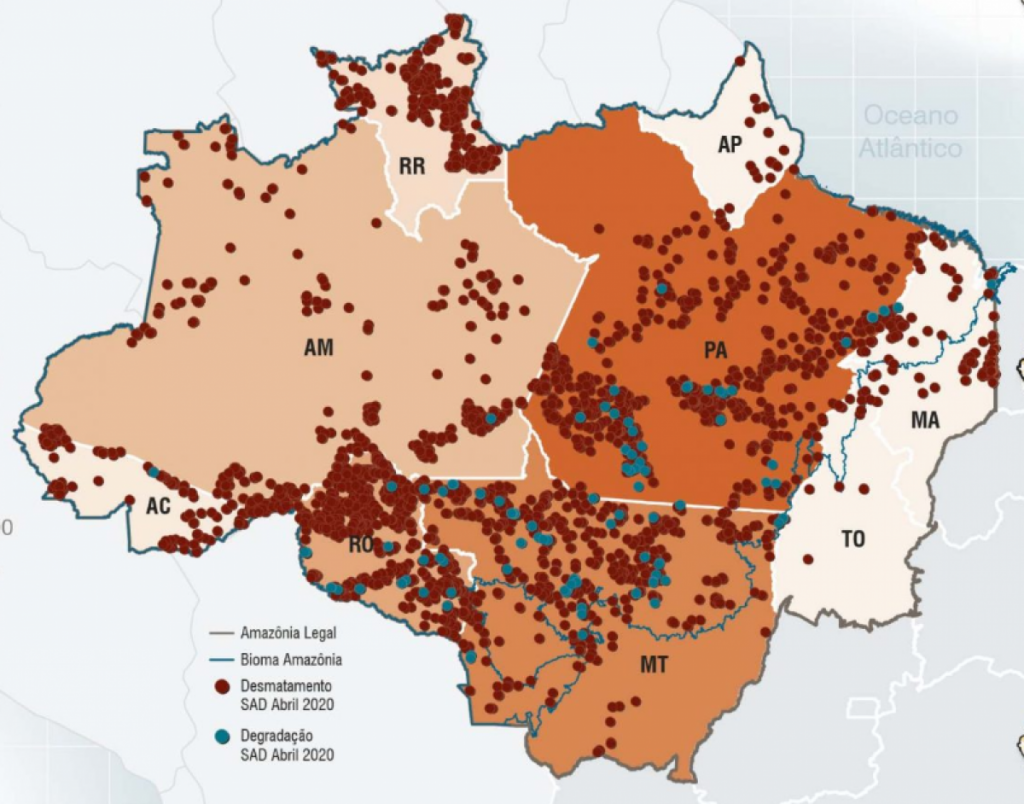
The operation operates in the Legal Amazon, which includes the following states: Rondônia, Acre, Amapá, Amazonas, Mato Grosso, Pará, Roraima, Tocantins and part of Maranhão.
The Transaction continues until June 11 and may be extended. The agencies involved claim that the action aims to reduce environmental crimes. Rondônia is one of the states that has shown the greatest increase in the number of deforestation and fires.
In April, the survey of the Deforestation Alert System (SAD), of the Institute of Man and Environment of the Amazon (Imazon) found that the state registered an increase of 19% in the focus of fires in relation to the same period last year.
Picture of Portal Amazônia
Operation Green Brazil takes place in:
Indigenous lands;
Federal environmental conservation units;
Protection Areas;
State units, but if requested by the state government.
According to the Law and Order Guarantee Decree (GLO), published in the Federal Official Gazette, missions are carried out exclusively by the Presidency of the Republic. Still, with the decree, the determination is that the operation takes place when the traditional public security forces are exhausted, and when serious disturbance situations are identified.
Rampant deforestation
According to data from Mapbiomas, Rondônia has already lost in the forest the equivalent of almost 10,000 football fields the size of Maracanã (RJ). In other words, 70 thousand km² of the environmental area between 1990 to 2017. The survey of the institute also brings other information. According to the data, 30 years ago the forest cover in the state was just over 20 million hectares and the opening of pasture was almost 2.7 million hectares.
As deforestation progressed, forest formation declined to more than 14 million hectares in 2017. Meanwhile, the opening of pastures has risen significantly almost nine million hectares. A growth of more than 200% in 27 years.
Mapbiomas is a partnership between universities, NGOs, national institutes, and Google (Google Earth Engine platform), which studies biomes and has monitored Brazil’s land use since 1985, using satellites.
In addition to the international organization, the National Institute for Space Research (Inpe) also monitors deforestation in the Legal Amazon. Inpe studies show a 29.9% growth in deforestation alerts in the Amazon region, in March this year, when compared to March 2019. This year, alerts have already been issued for 326.51 km², while in the same period of last year the alerts went to 251.3 km².
In addition to the increase in devastation, there was also a greater number of fire outbreaks, endangering animals, and vegetation. According to Inpe, in January, the number of fires in the Amazon was 30% higher in 2019 compared to 2018. In all biomes, 89,176 fires were recorded in 2019, compared to 68,345 in the previous year.
Limits for deforestation
According to the legislation that created the Legal Amazon, the properties must preserve 80% of the native vegetation. The remaining 20% are free for alternative land use. However, prior authorization from the state agency is required – in Rondônia, the State Secretariat for Environmental Development (Sedam
Henrique Nery Cipriani, forest engineer, and researcher at the Brazilian Agricultural Research Corporation (Embrapa), in Rondônia, explains that if the property has less than 80% of the preserved area, it is mandatory to recompose the trees. This happens as follows:
If deforestation occurred before July 22, 2008 (consolidated area), it must be recovered up to the limits determined by state legislation. In the case of Rondônia, 10%, 20%, or 50%, depending on the size of the property.
If deforestation occurred after July 22, 2008, 80% of the destroyed area must be recovered.
If you are far from permanent preservation areas (APP) and up to date with the permitted limits, the producer can carry out any activity.
If you need to use fire to manage pasture, it is essential to request the approval of Sedam.
The rules and limits were created to protect the forest, wild animals, and the indigenous population. Deforestation and fires compromise the functions of the forest, breaking the ecological chain. Thus, the work of forest recovery is very difficult, extending for decades. The best thing to do is to increase enforcement and more severely punish those responsible for environmental crimes.