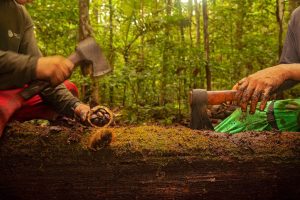
Chestnut trees from the Iratapuru River Sustainable Development Reserve, in Amapá, cut the hedgehog to extract the Brazil nut. The valorization of sustainable agro-extractive activities in the Amazon is one of the ways pointed out by specialists to generate income while preserving the forest.
PHOTO OF MAURÍCIO DE PAIVA
Initiatives that combine economic development and environmental preservation have the potential to overcome illegal and predatory activities, experts say.
From Mato Grosso to Pará, a long green corridor extends formed by different areas of environmental protection. As soon as the federal government proposed to review conservation units this year, the criminal action of illegal land grabbers, loggers and miners intensified in the region. On the local radio of the residents of Terra do Meio, as the region between the Xingu and Iriri rivers is called, the rumor circulated that extractive reserves (Resex) could lose their protective status. The areas have so far been spared by legislation, but Altamira, the municipality in which they are located, occupies the top of the list of the Deter system of the National Institute for Space Research (Inpe), with deforestation alerts in 846.8 km² from January 1 on September 10 this year – 216.1 km² in conservation units. The situation took on a frightening proportion, reports Pedro Pereira, rubber tapper and community leader at Resex Riozinho do Anfrísio. “It is at this time that we have to find someone who can help. It’s been quite a few years since Resex was created with everything still. And then it went off today. He came back, and he came back hard,” says Pereira.
If deforestation and fires mark the current moment in the Amazon, the economy of the standing forest has consolidated itself as an important economic engine of the extractive reserves of Riozinho do Anfrísio, Iriri and Xingu. Currently, people sell rubber, Brazil nuts, copaiba oil, flour and babassu oil, among others. Coconut oil and andiroba are the next products that extractive intend to commercialize. The peoples of the Xingu forest are part of the Origens Brasil network, administered by the Institute for Forestry and Agricultural Management and Certification (Imaflora) in partnership with the Socio-Environmental Institute (ISA). In June, the initiative won the International Innovation Award for Sustainable Food and Agriculture, from the United Nations Food and Agriculture Organization (FAO).
Pereira, 54, is the son and grandson of Ceará people who migrated to Terra do Meio, hired to work as rubber tappers during the rubber cycle in the Amazon in the 1940s. With the end of the economic boom in 1945, the “bosses” and the State left the region, but the workers continued, and commercial relations changed.
You can continue reading this article on https://www.nationalgeographicbrasil.com/meio-ambiente/2019/09/como-economia-de-floresta-em-pe-pode-salvar-amazonia-e-o-planeta