Government exchanges command of ICMBio for military
15 de julho de 2020
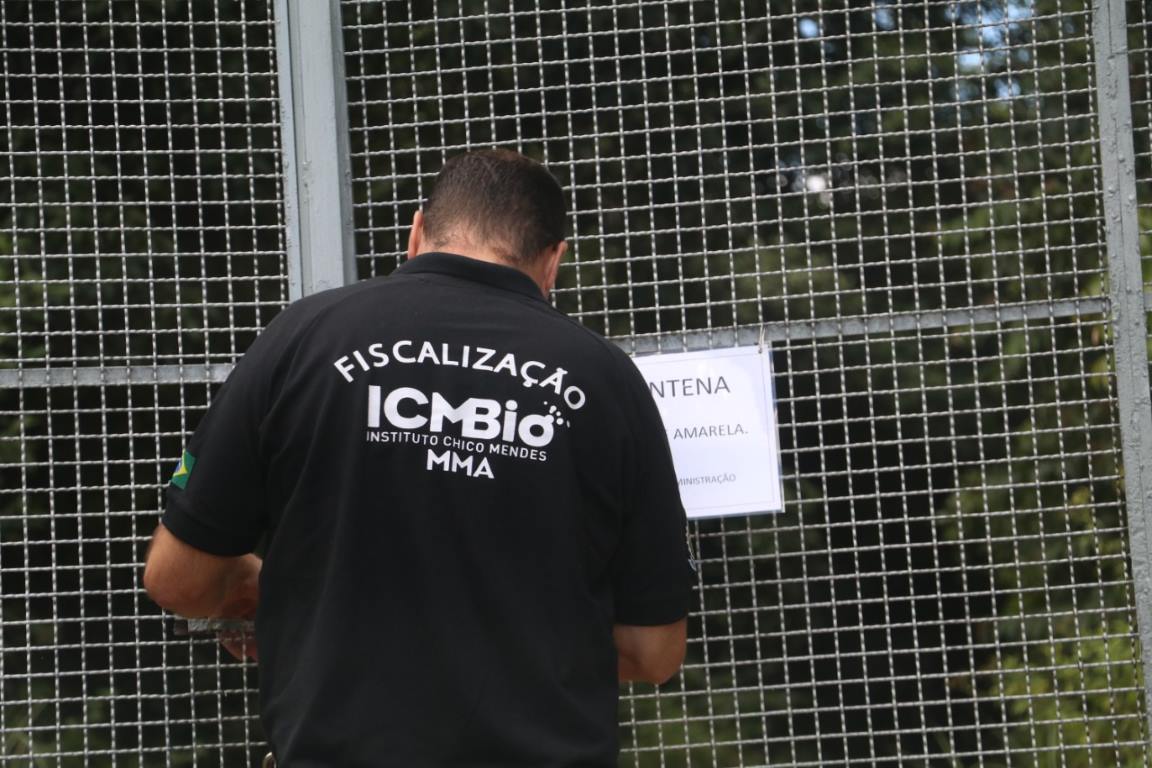
The Ministry of the Environment formalizes changes in the structure of the Chico Mendes Institute for Biodiversity Conservation (ICMBio).
The decision was published on May 12, 2020, in the “Diário Oficial da União”, stating that, among other changes, the institute will suffer a drastic reduction in the number of coordinations.
See below for more details on this change and what it represents for the current environmental scenario in the Brazilian Amazon region.
About the Institute
Created in August 2007, ICMBio is an autarchy under a special regime that is linked to the Ministry of the Environment and is part of the National Environment System (SISNAMA).
The name of the institute pays tribute to Francisco Alves Mendes Filho, better known as Chico Mendes. In short, Chico was a rubber tapper, unionist, environmentalist, and Brazilian political activist of great importance for the preservation of forests and native rubber trees.
ICMBio has the function of exercising environmental police power to protect federal conservation units; execute the actions of the National System of Conservation Units, being authorized to propose, implement, manage, inspect, monitor and protect the conservation units created by the Union; to promote and execute programs related to research, protection, and conservation of biodiversity.
What has changed?
The main aspects modified by the Federal Government’s decision are:
Reduction and displacement of the institute’s coordination;
Admission of managers with no previous experience in environmental conservation;
Centralization of decisions.
The institute’s command will no longer rely on its coordination and will be carried out by management with management being created for each Brazilian region (North, Northeast, Midwest, Southeast, and South). Only one of the 5 nominees for the positions has a career at ICMBio. This is Fábio Menezes de Carvalho, who has served as a civil servant since 2009 and will now head the General Management of the North region.
The regions will undergo changes in the number and location of their coordinations. The Southeast region, for example, which had two coordinations, will now have only one management. It is noteworthy that the coordinations were located one in Minas Gerais and the other in Rio de Janeiro, while the new management will be installed in São Paulo, a place that did not host any of the institute’s subdivisions.
This displacement directly interferes with the monitoring strategy of the conservation units, reducing the institute’s efficiency in preserving the environment.
Before the change, 11 coordinations were responsible for dividing the attention of the 334 conservation units. However, with the strategy of centralizing decisions, the coordinators were replaced by only 5 managers. The decision also determines that new managers receive the highest-paid degree from the national public service, the DAS 4 position.
The reduction in the number of coordination units allows the government to have greater agility in decision making regarding environmental conservation needs across the country, however, it makes these decisions less democratic, as it excludes mediation that was previously carried out by a wide set of coordinators
Where did these changes to the ICMBio structure come from?
The ordinance published in May puts into practice the measures that had been defined in February by Jair Bolsonaro.
The decree signed by the current president announced permission for changes to be made to the structure of ICMBio. Among other aspects of the decree, one of the most alarming is the permission for the conservation units to be headed by any commissioners, regardless of having ties to the institute.
In other words, the measure formalizes the right of the Ministry to appoint non-career professional positions.
The measure also saw a violent reduction in the number of positions to head the units. As a result of this decision, a total of 42 leadership positions were extinguished.
What are the consequences of this for the Amazon Region?
Of the former 11 ICMBio coordinations, 5 were located in cities in the Amazon. Therefore, the exchange of these coordinations by only one management for the entire North region of the country represents a significant decrease in the institute’s apparatus in the Amazon region.
It is evident that this alteration weakens the conservation system, leaving environments such as forest reserves and indigenous territories even more vulnerable.
In addition to the changes to ICMBio, the current government undertook similar changes in the coordination of the Brazilian Institute for the Environment and Renewable Natural Resources (IBAMA). Without any justification that presents technical criteria, the positions of General Coordination of Environmental Inspection and Coordination of Inspection Operations had their representatives replaced by ex-commanders of the Ostensive Rounds Tobias de Aguiar (ROTA), an elite troop of the Military Police (PM ) from Sao Paulo.
Actions like those being carried out by the current Brazilian Federal Government are motivated by interests that have nothing to do with preserving the environment. On the contrary, one of the motivations for exonerations of former IBAMA inspection coordinators is to retaliate against operations to combat environmental crimes. The ex-coordinators were removed from their posts two weeks after they ran a major operation in the region.
In addition, the government measures that have been taken in relation to institutes for the protection and conservation of the environment have a clear intention to facilitate the carrying out of illegal actions, especially in the Amazon rainforest region.
As the fragility of the preservation system increases, actions such as deforestation, invasions of indigenous lands and illegal mining are increasingly likely to move forward. Instead of investing in measures that can curb these procedures, the government is making them increasingly viable.