The beauty of the Amazon is as extraordinary as its biodiversity. In fact, it is the variety of fauna and flora that make the Amazon rainforest unique in the world.
Considered the largest in the world, the Amazon corresponds to 53% of the tropical forests that still exist. It is in northern South America: Peru, Colombia, Venezuela, Ecuador, Bolivia, Guyana, Suriname and French Guiana. In Brazil, it covers the states of Amazonas, Acre, Amapá, Rondônia, Pará and Roraima.
Among the various characteristics presented is the equatorial climate. This is because the forest is located close to the Equator. This is the reason for the high temperatures and humidity of the air.
Diversity
In the Amazon region it is possible to find a huge variety of plants. A good part of the flora is composed of unique vegetation, that is, that can only be found in the Amazon.
In the region, fauna, flora and climate are synchronized and one cannot survive without the other. Everything in the Amazon surprises by its greatness. When we talk about flora, we talk about its 30 thousand plant species available for the manufacture of medicines, cosmetics, furniture, various products.
Among the plants that most attract attention and one of the most well-known, is the water lily. Widely found in rivers, the plant blooms white flowers at night and turns pink the next day.
Plants from the Amazon
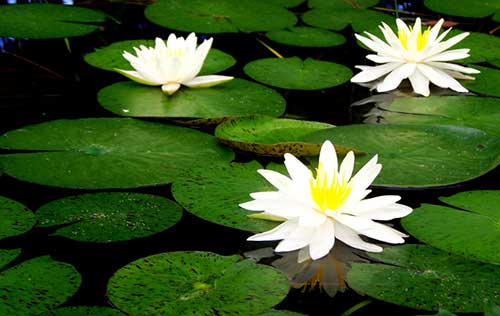
- Vitória-regia: It is one of the largest aquatic plants in the world and is part of the igapó vegetation, places that are always flooded by water courses. The root of the water lily is a tuber similar to cassava and yam. It is very rich in starch and mineral salts and is consumed by local residents.
- Andiroba: It is part of the lowland vegetation. The oil used as a natural repellent is extracted from andiroba. The oil, extracted from the seeds of andiroba, is used in cosmetic products, due to its hydration capacity. The fruit and the seed are also used in medicines that can help control cholesterol and pressure; in reducing muscle pain and treating sore throat and tonsillitis.
- Cedar and mahogany: Used in the manufacture of furniture. These trees are born in areas considered solid land. Cedar and mahogany are easily recognized for their reddish-brown color, fine grain, great hardness and high density. They are very popular for carpentry, carving, decoration and interior finishing. They are also used in the manufacture of musical instruments.
- Rubber trees: Its sap is used in the manufacture of various products. It is a raw material for the manufacture of tires, kitchen utensils, toys, rubber gloves, condoms, among others that have rubber as their main ingredient.
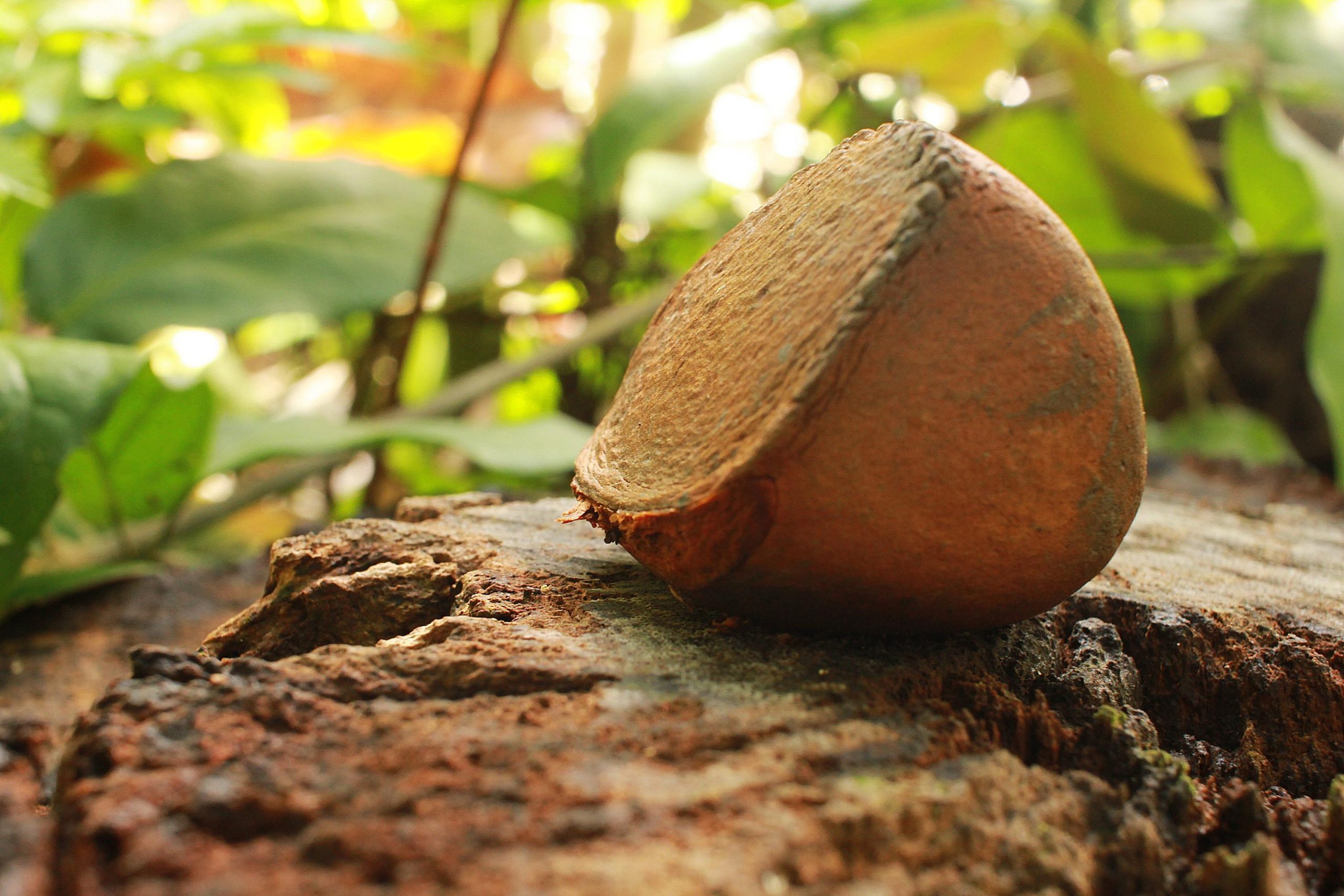
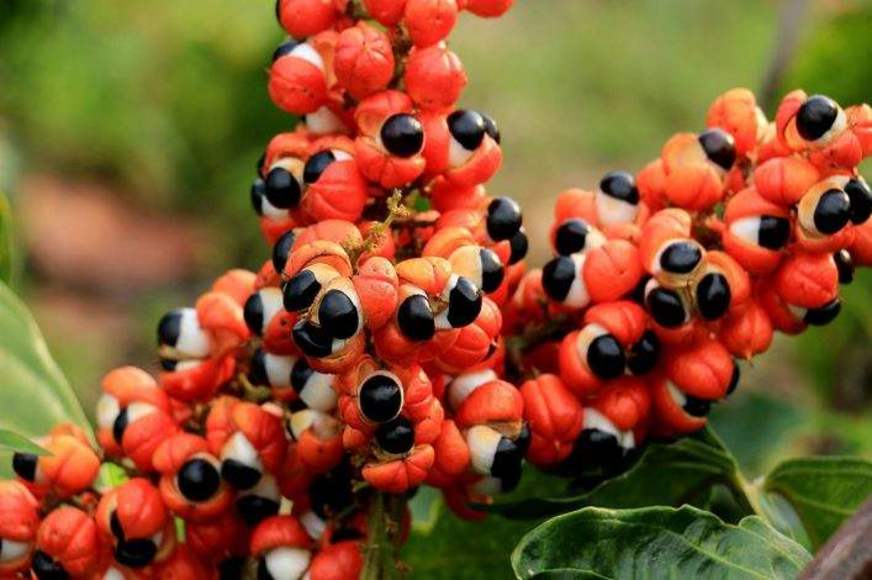
- Guaraná: It is the fruit of guaranazeiro, a plant native to the Amazon. Very commercialized in Brazil and in the world, the energy fruit moves the economy of the Amazon region. It is widely used in the pharmaceutical industry to treat cellulite, nervous depression and migraine.
- Samaúma: It is the largest tree in the Amazon and one of the largest in the world. The plant is able to draw water from the depths of the soil. As a result, it supplies not only itself, but also other species. Its roots, known as sapopemba, irrigate the entire area around it. Samaúma wood is used in the construction of vessels, plywood core and cellulose pulp production. Because it is waterproof, the fiber that surrounds the seeds serves as a filler for mattresses, pillows and for life-saving products. The tree also has medicinal uses. That’s because its sap is effective in curing conjunctivitis. Bark tea is a diuretic and is also used to cure malaria.
Deforestation harms vegetation and the economy
The process of deforestation in the Amazon has been damaging the vegetation. Some plants are already in extinction and the tendency is to get worse, because in addition to deforestation, man also causes fires. The fire destroys everything ahead and prevents the growth of the old vegetation, by weakening the soil.
Data from the National Institute for Space Research (Inpe) demonstrate the growth of large-scale deforestation. In the period from August 2018 to July 2019, there was an increase of 29.54% over the previous period. The highest index recorded since 2008.
The criminal action affected an area of native vegetation of 9,762 square kilometers (km²). Pará was the most affected with 39.56% of the deforested area. Soon after, Mato Grosso (17.26%), Amazonas (14.56%) and Rondônia (12.75%) appear. These four states alone were responsible for 84% more of the deforested territory.
Even with the great extent reached, there are still preserved areas, but they are also in danger due to precarious inspection and impunity. In these areas it is possible to find untouched vegetation. There, it is possible to find the coumaru that has a smell reminiscent of vanilla. The tree has a substance used for medicinal purposes and is also used in the manufacture of perfumes, in addition to flavoring tobacco and snuff and for oil extraction.
Another fruit widely used by the cosmetics industry is cupuaçu. The cupuaçuzeiro or cupuaçueiro can reach 15 meters in height. It is one of the most important fruit trees in the Brazilian Amazon because it attracts followers from all over the world because of its properties.
Due to its benefits, the cosmetic industry has used the oil extracted from cupuaçu in the manufacture of many products. With the fruit it is possible to make shampoos and moisturizing creams.
Approved in the national and international markets and with economic potential for industrialization and commercialization, cupuaçu is also widely used in cooking and in the food industry. The pulp is present in the preparation of ice cream, juices, jellies, sweets, mousses, chocolates, candies, cookies and yogurts. The seed is used in the production of chocolate, since it is very similar to cocoa.
Economically viable
The Amazon is a storehouse of plant species that help human survival and the preservation of the planet. In addition, it is driving the economy of the Amazon region and Brazil.
Without the unique and diverse vegetation of the forest, many remedies would not exist. Therefore, preserving the Amazon is a matter of continuing the human species and not just a question of activism. It is to preserve life in every way.