
On Wednesday, July 1, the Ministry of the Environment announced the launch of a project that intends to raise foreign funds to be used in the preservation of the Amazon. It was also announced a project that aims to reward those who comply with rules related to preservation in this region.
“Adopt a Park” was the name given to the program that aims to raise foreign funds. According to Ricardo Salles, Minister of the Environment, when interviewed by CNN Brasil, Amazon Forest has 132 federal conservation units, and for this reason, they want national and foreign companies with the mission of conserving them.
This program is likely to take place through a presidential decree and will attract private capital to the region. Currently, each federal conservation unit receives an average of 200 thousand reais from the government.
With the adoption of this new program, the estimate is that this amount will increase and facilitate mechanisms for environmental preservation. With the implementation, it is expected to raise around 650 million Euros to be destined solely to the Amazon.
The minister also mentioned the example of the Tapajós Environmental Protection Area, which has about 200 thousand hectares. When charging 10 Euros for each hectare, there is talk of two million Euros that can be used to preserve the Amazon.
Still, according to Ricardo Salles, Brazil’s sovereignty in the Amazon will remain intact, what will exist is just an alliance in the sense that that region may bring some opportunity to other countries.
In this sense, “Adopt a Park” seeks to:
- Expansion of financial resources for environmental preservation
- Improvement of structures, such as monitoring devices and inspection vehicles
- Disclosure of companies that invest their capital in the preservation of conservation units
In relation to the other program, the Minister of the Environment named it “National Program for Payments for Environmental Services – Floresta +”. According to Salles, 500 million reais will be allocated to the award of entities linked to effective environmental preservation practices.
The Floresta+ Program will foster:
- The private market for payments for environmental services in areas maintained with native vegetation coverage
- The articulation of public policies for the conservation and protection of native vegetation and climate change.
- In addition, according to Salles, the Floresta+ Program is the largest contemporary environmental credit
- program. The credits used in the payment come from the Green Climate Fund (GCF).
Understand the Green Climate Fund (GCF)
The Green Climate Fund or GCF has a global origin and was created with the objective of circumventing the consequences caused by global warming. Its establishment gave it, in 2010, at the United Nations Conference on Climate Change.
Its operation is limited to raising and sharing resources for sustainable programs in underdeveloped countries. Some areas of operation are:
- Energy production and procurement;
- Means of transport;
- Forest areas and land use;
- Industrialization processes;
- City constructions;
- Water health;
- Support to communities;
- Protection of ecosystems;
- Infrastructure, among others.
What are Conservation Units (UCs)?
Conservation Unit is the natural place that requires environmental protection, given its special condition. That is, it requires the preservation of the ecosystem of that particular region.
Its regulation comes from Law No. 9,985, of the year 2000, which created the National System of Conservation Units (SNUC). There are several types of protected areas, which are divided into:
- Integral Protection Units
- Sustainable Use Units
As the name implies, the former are focused on research and their use, therefore, is more restricted. The latter can be used in activities aimed at education, technical visits and even their use can occur in a sustainable way.
Some examples of Conservation Units are:
- Biological reserves
- National Parks
- National forests
- Environmental protection areas, among others.
The Amazon and international greed
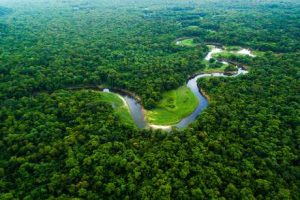
In Brazil, for policy purposes, the Amazon is called Legal. And, without a doubt, it is a territory with great natural wealth. In other words, it is the largest tropical forest in the world and the largest reservoir of fresh drinking water on the entire planet.
This is enough to demonstrate why Amazon Forest is a place of international greed. The potential of the forest is sufficient to transform Brazil into the first world power.
As a result, it is no wonder that several international campaigns claim that Amazon Forest is everyone’s heritage. After all, the greatest natural wealth in the entire globe can generate money for those who manage it.
In this area, it is important to plan well any programs that come with international capital support in the Amazon. Now, before the existence of international capital, there are already reports from other countries believing that the Amazon Forest is the patrimony of all humanity.
Imagine, then, with the implementation of a program that relies on foreign investments. For this reason, more than ever, it is important to maintain the sovereignty of the Federative Republic of Brazil.
What is sovereignty?
When it comes to the sovereignty of a country, one can think of the idea of that country’s autonomy, as a whole, in the international sphere. In this sense, it is up to the country to self-determine before its decisions, nation, and people.
The Federal Constitution of 1988, in force in Brazil, defines, in its article 1, sovereignty as one of the foundations of the Federative Republic of Brazil. This comprises the indissoluble union of states, municipalities, and the Federal District (DF).
Thus, it is to be noted that sovereignty is a constitutional value and has a close connection with the independence of a country. It is a value used for the State’s self-assertion before other international actors.
Furthermore, the Legal Amazon is Brazilian heritage. In such a way, any foreign-invested within this patrimony must be in a way that does not affect the sovereignty of the country.
Therefore, the implementation of any programs that rely on foreign capital, especially because it is the largest tropical forest in the world, must be very well planned so that it does not mitigate the sovereignty of the Federative Republic of Brazil.