Deforestation of the Amazon rainforest was the biggest in 10 years in April
9 de julho de 2020
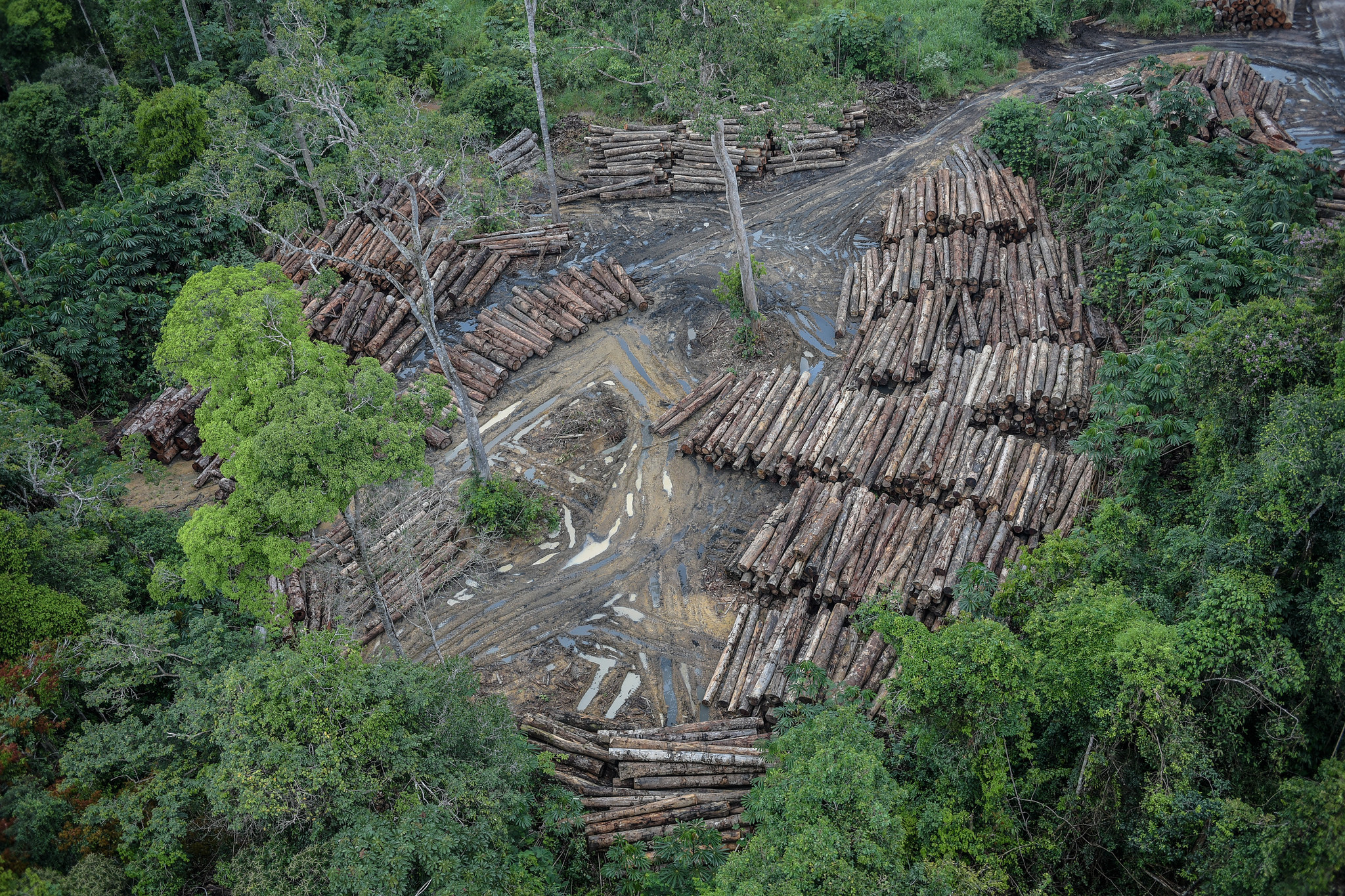
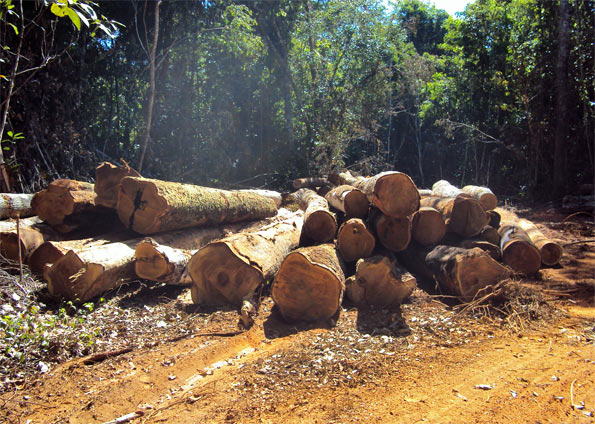
In this article, we wanted to give good news about the Amazon to our readers, but the constant increase in deforestation does not allow us. According to data from the Deforestation Alert System (SAD), from the Institute of Man and Environment of the Amazon (Imazon), April this year showed an increase in deforestation with 529 km² of the felled forest. The biggest in the last ten years.
The Imazon data points to an increase of 171% in relation to April 2019. The organization’s studies show that almost a third (32%) of the deforested area is in Pará. The state leads the ranking of those who lost the most forest area in this state month.
After Pará are:
Mato Grosso with 26% of the area deforested;
Rondônia with 19% of the area deforested;
Amazonas with 18% deforestation;
Roraima, which had 4% deforested area;
Acre with 1% deforested area.
Rising amid pandemic
Despite the recommendations for social isolation, loggers, land grabbers and illegal miners continue to cut down trees in the Amazon rainforest.
Illegal actions take place throughout the Amazon, including indigenous lands. The Indians, in addition to seeing their lands being invaded, are exposed to Covid-19. They are vulnerable to the disease and do not find support from the Federal Government to avoid contact with invaders, not even to prevent coronavirus.
According to a survey by the Socio-Environmental Institute, the Yanomami territory, located between Roraima and Amazonas, is one of the most vulnerable. The area was also the second most deforested in April, according to information from SAD satellites.
Funai data confirm more than 350 cases of Covid-19 in indigenous people in Brazil, more than 20 in the Yanomami Special Indigenous Health District (DSEI) alone.
How monitoring is done
Imazon’s Deforestation Alert System (SAD) is one of the most used to monitor deforestation in the Amazon. In addition to it, there are other monitoring systems, such as Prodes and Deter, which are maintained by the National Institute for Space Research (INPE). Unlike the last two systems, SAD is not a government agency. Its deforestation alerts are independent and support studies and work carried out by NGOs.
This combination of images allows the SAD to observe the same areas at intervals of 5 to 8 days. The system detects deforestation with details of 20 to 30 meters in areas from 1 hectare. Forest areas are also monitored through clouds.
Forest loss
Just to have an idea of the damage caused by human action, Brazil lost about 13,610 km² of virgin tropical forest. Over 95% of the loss occurred in the Amazon. The survey is from January to December 2019 and represents one-third of what was lost across the planet. The data comes from the report of Global Forest Watch, an international organization that maintains an online platform for global monitoring of forests.
The platform uses data from satellite monitoring by the University of Maryland, in the United States, in partnership with Google, Nasa and the United States Geological Survey. Global Forest Watch analyzes found that the main reasons for forest loss are related to the expansion of areas for pasture and land speculation. To get to the territories, the interested parties cut down trees and cause fires, killing vegetation and animals.
Mass extinction
A study published in the scientific journal PNAS (Proceedings of the National Academy of Sciences) brings a frightening revelation: the sixth mass extinction of about 500 species of terrestrial animals. The most frightening thing is that the disappearance of these animals can occur in 20 years.
This is one of the most worrying environmental threats to civilization. According to PNAS, without human intervention in the environment, that same rate of loss would take thousands of years to happen.
With the increasing rates of deforestation and fires, extinction was accelerated and soon many of the wild animals we know today will cease to exist.
One of the causes of this threat are:
Rapid population growth;
High human consumption rates;
Deforestation;
Increased fires;
Consumption of wild animals;
Trafficking in animals for illegal breeders;
Urban expansion
To determine which animals are endangered, the researchers analyzed 29,400 terrestrial vertebrate species, which have fewer than 1,000 individuals. The studies identified 515 species with populations in this situation, half of which have less than 250 individuals. Most found in tropical and subtropical regions were mammals, birds, reptiles and amphibians.
Government conniving
Even with studies that demonstrate the seriousness of environmental deforestation, the Federal Government continues to act for the benefit of those who only think about destroying forests.
The scrapping of inspection structures and the reduction of punishments for those who invade indigenous lands and destroy areas of environmental protection have become commonplace. National and international entities have already warned the world about the devastation of the Amazon with the government’s endorsement. Countries that sent resources for forest protection decided to suspend them because they did not agree with Bolsonaro’s policies
And the problems don’t stop there. In addition to putting fauna, flora and indigenous peoples at risk, government support for illegal actions harms the entire population of the Amazon region.
This is because the increase in fires causes respiratory diseases in residents. The smoke takes mainly children and the elderly to hospitals.
Due to criticism suffered by the governors, President Jair Bolsonaro authorized the deployment of Armed Forces troops to the region. The objective is to combat fires and illegal deforestation in the states that comprise the Legal Amazon: Rondônia, Acre, Amapá, Amazonas, Mato Grosso, Pará, Roraima, Tocantins, and part of Maranhão.
The determination covers the border strip, indigenous lands, federal units of environmental conservation, and other federal areas in the states.