
The current moment is critical. In the foreground is the seriousness of the situation caused by the accelerated spread of the coronavirus in Brazil and worldwide. However, this is not the only factor that compromises the stability, safety, and health of the Brazilian people today.
An old problem in our country is the deforestation of the Amazon rainforest. Covid-19 not only takes environmental preservation out of the limelight, but it also contributes to fueling conditions that favor deforestation.
Experts who analyze data from the National Institute for Space Research (INPE), a Brazilian federal agency dedicated to conducting research and technological production in the areas of space and the terrestrial environment, identify a significant growth in cases of deforestation in the Amazon region.
The institute compared the current deforestation rate with that presented at the same time last year. The figures show that between 2019 and 2020 there was an increase of 51% regarding the extent of deforested areas.
Among the factors that contribute to the increase in deforestation, we highlight 3. They are:
• Reduction of environmental inspection carried out by IBAMA;
• Devaluation of the ways of using natural resources created by the people who inhabit the region;
• Constant investment in projects that cause damage to the environment.
For more details on each of these points, see the topics below.
1 – Reduction of inspection
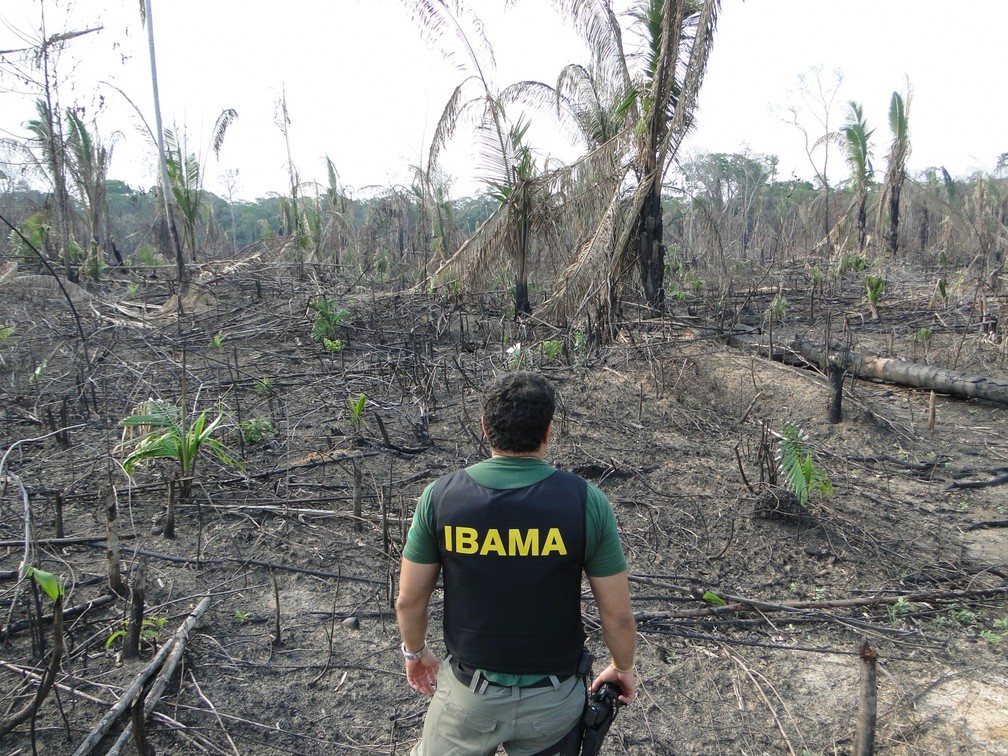
The Covid-19 pandemic caused a decrease in an environmental inspection carried out by the Brazilian Institute for the Environment and Renewable Natural Resources (IBAMA). Several professionals who occupied the function of inspectors needed to be dismissed for being a risk group for the new coronavirus. In addition, difficulties in obtaining funds prevent the hiring of new professionals so that the inspection would not be lacking.
This reduction allowed an increase in the invasion of environmental preservation areas and indigenous lands.
According to Ricardo Abad, an analyst at the Instituto Socioambiental (ISA), monitoring data like this is essential to form an understanding of the risks suffered by the Amazon region today. The results presented indicate that there was already a tendency towards an increase in deforestation and this reality worsens with the reduction of inspection.
2 – Misuse of locally productive and economic potential
There is no measure of economic use of Amazon’s wealth that does not imply the destruction of the region. This poor performance is not an unprecedented situation in the Brazilian scenario. The way in which Amazon has always been inserted in the global economic context creates the backdrop of the difficulties faced today by the forest and its surrounding areas.
The ways of using local wealth followed a pattern established “from the outside in”. This means that, in general, the policies implemented did not know or did not intend to consider, for example, the natural vocation of the population, who already obtained appropriate techniques to extract benefits from the local nature without acting in a predatory way in relation to this.
Historically, the economic cycles implemented in the Amazon region contributed to the construction of the current reality. This story has chapters like the Rubber Cycle, in the 19th century, and, more recently, in the 60s, the investment made by the military for the opening of highways and for the construction of large hydroelectric dams, including also the projects that had as their mining-based.
A great example of this problem in the management of the region’s wealth and powers is what occurs in the Pará Amazon. Since its occupation, the local population has suffered from the economic model implemented there. The form of extraction of natural resources did not take into account factors such as history, culture, and the productive and economic capacity of the communities and peoples living in the region. On the contrary, due to the trail of destruction left, this poorly planned economic administration offers countless losses to the population, further hampering their form of subsistence.
3 – Investment in projects that harm the environment
The Growth Acceleration Plan (PAC) established by the Federal Government in 2007 aims to plan and execute major works of urban, logistical, social, and energy infrastructure that enable the accelerated and, at the same time, sustainable development of the country.
The investments supported by the PAC are mainly focused on the construction of infrastructures such as hydroelectric plants. Among these is Belo Monte, located in the municipality of Altamira, in southwest Pará.
Since the beginning of its activities in 2016, the hydroelectric plant has faced opposition from environmentalists (both Brazilian and international), local indigenous communities, and even members of the Catholic Church. This opposition is due to the significant environmental problems that would be caused by Belo Monte. The full operation of the project took place in November 2019, when the last hydroelectric turbine was started.
Factors like this help us understand the causes that led the region to the position of one of the municipalities that most deforested the forest in 2019.
The impacts of political decisions such as those that allowed the implementation of this hydroelectric plant are not limited to the environmental aspect. In addition to the damage to the environment, there is a worsening of the social situation of all peoples and communities that live in the explored regions.
The data is alarming (even more so in the current context)
The situation in 2019 was already alarming. The rate of increase in deforestation areas in August was 278%. The result draws attention because it exceeds the historical average of the last 20 years.
What, under normal circumstances, should be carefully observed, becomes something even more urgent at the current stage in which Brazil is in the wake of the Covid-19 pandemic.
The focus of most segments in this period is the pandemic. Whether for the development of solutions to overcome the difficulties of social isolation, or for the search for efficient solutions to cure and prevent the disease, or to offer the proper journalistic coverage to the propagation data (which presents news day after day), everyone is facing Covid-19. This reduces the public’s attention regarding other serious problems such as the advance of deforestation in the Amazon region.
In addition, the pandemic causes, as already mentioned, several difficulties in the environmental inspection. The reduction in the number of active inspectors, as well as the reduction of investments in this area, are factors that make up a convenient situation for the performance of enterprises that benefit from the invasion and deforestation of lands.