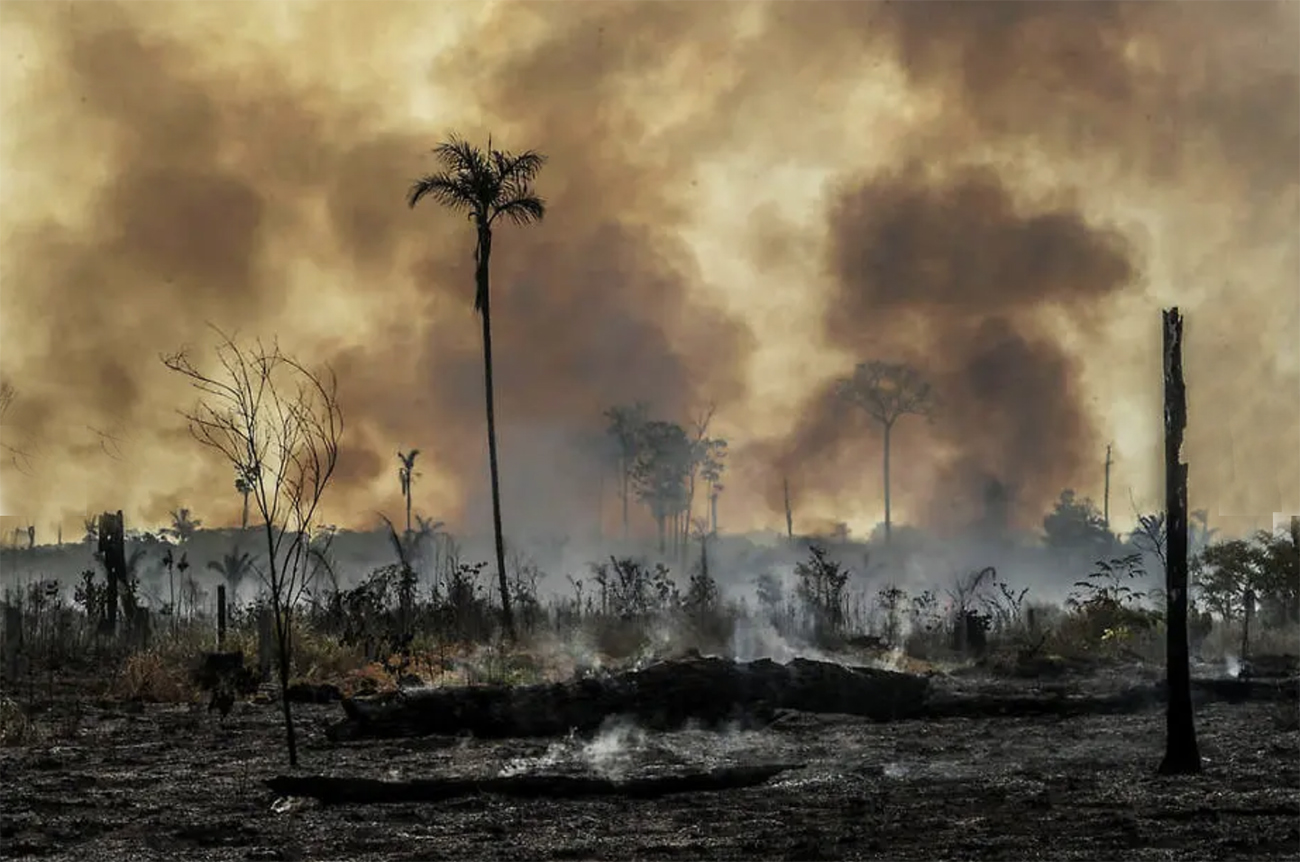
Social isolation is a reality in Brazil and in the world. The measure aims to combat the proliferation of the coronavirus, preventing the collapse in health. For that, it was necessary to paralyze some economic activities. Although the country is practically at a standstill, a group has not been intimidated and continues to work intensely to destroy the Amazon.
According to the Real-Time Deforestation Detection system (Deter), developed by the National Institute for Space Research (Inpe), deforestation alerts in the Amazon increased 30% in March compared to the same period last year, from 251.42 km² to 326.51 km². In the region, Ibama has already detected that chainsaws are active.
The data point to a cruel reality for the future of the forest. Since last year, there has been a resumption of devastating actions by miners, loggers, and landowners. This year, there was already an increase in deforestation compared to last year, but with the reduction of inspection by Ibama and other agencies, the forest is practically abandoned to its own fate.
According to information from Deter, the forest has already lost 5,315 km² in the accumulated value from August 1st of last year to March 31 of this year. An increase of 99% if we compare the same period of eight months between 2018 and 2019, which added up to 2,661 km².
Unlimited devastation
The state of Pará leads deforestation with 42% of the accumulated loss. The governor of Pará, Helder Barbalho, expressed concern about the frequency with which the cutting of trees has been occurring. He says he asked for support from the Federal Government to curb the actions of illegal immigrants. “If there is no drastic and immediate inspection measure, we will have 2020 worse than last year,” said the governor.
After Pará, the state most affected is Amazonas, with 73 km². In third place comes Mato Grosso, with 68 km². In Pará and Mato Grosso, the devastation is linked to the expansion of agriculture and the flow of production. Land grabbing is a big problem in Amazonas. That is the invasion of public areas for later regularization.
According to Deter’s warnings, more than 97% of the destroyed area corresponds to deforestation with exposed soil. This means that the area has lost its vegetation cover. 1.7% are the ones that maintained the vegetation. And the remainder, equivalent to 1.1%, is related to mining activity.
Planned action
The increase in deforestation was already predicted by researchers and specialists. They make the worst predictions for the Amazon this year, but not just because of the isolation due to the coronavirus. The main reason is the government’s plan to legalize areas illegally occupied by farmers.
Another government project is the opening of economic exploration, which will facilitate the sale of land to foreign investors. With this, the Ministry of the Environment aims to release 67 protected areas that have environmental protection status. The government also aims to subsidize the planting of sugar cane. In parallel to this, resources from inspection agencies, such as Funai, continue to be cut.
Mining
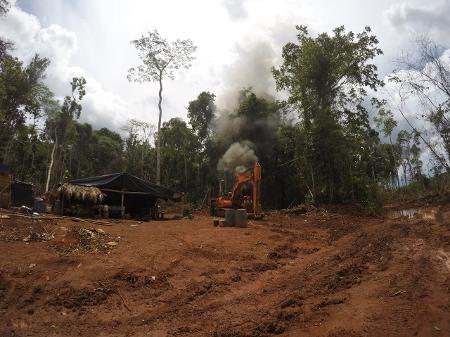
The incentive to mining is one of the main reasons that lead to illegal actions in the Amazon rainforest. The activity is the one that most damages the fauna and flora of the forest, in addition to being a constant threat to the Indians and their lands.
However, the government ignores these facts and insists on encouraging the coming of mining companies to the Amazon region, justifying economic growth
The measure removes the Indians’ right to land and contributes to environmental crime.
Constant danger
When deforestation gets out of control, the risks are constant for all forest dwellers, animals, and vegetation.
Are at risk of extinction
- 85 species of flora;
- 2.5 million types of insects;
- 3 thousand species of fish;
- 1,300 birds of different types;
- 428 amphibians;
- 427 mammals;
- 378 reptiles.
Exoneration at Ibama
Amid the increase in deforestation, the federal government published the dismissal of the director of Environmental Protection of the Brazilian Institute of the Environment and Renewable Natural Resources (Ibama), Olivaldi Azevedo.
According to the Minister of the Environment, Ricardo Salles, the decision was taken in common agreement to improve the fight against deforestation.
Indians in danger
Indigenous peoples are also in danger because they depend on land and rivers to provide their livelihoods. Since the beginning of the pandemic, there has been a significant increase in invasions of indigenous lands in the Amazon.
With the reduction in the number of inspectors, the Indians are the most vulnerable in the squatters’ war to expand lands. But it is not just those who are eyeing indigenous reserves. There are also illegal miners and loggers who work in cutting down trees and exploring for minerals.
In addition to the danger of extinction of natural resources and the invasion of their lands, indigenous peoples are exposed to the coronavirus. The disease has already contaminated hundreds of Indians and caused the death of some, creating a public health problem in the Legal Amazon.
The Amazonas Health Surveillance Foundation does not report the real situation of patients who tested positive in indigenous communities.
Roads blocked
Since the Federal Government increasingly reduces actions to combat illegal deforestation, the Indians have decided what to do on their own. Because they are more vulnerable to epidemics, several indigenous ethnic groups have closed their village entrances. They fear the advance of the COVID-19 in the territories and that this could endanger the lives of the indigenous population.
The Agribusiness Observatory in Brazil reported that there are barriers in areas of 23 ethnic groups. The Indians closed in the following states: Acre, Bahia, Maranhão, Pará, Mato Grosso, Mato Grosso do Sul, Tocantins, Minas Gerais, Paraná, Roraima, Rondônia and Santa Catarina.
According to the Funai Servers Association, five Indians were killed on account of the COVID-19. Fatal cases were recorded in Amazonas, Pará, and Roraima.
Funai criticizes the Indians’ decision to close the villages. The organization maintains that the roads cannot be blocked during the pandemic of the new coronavirus because the obstructions can compromise the circulation of people and the supply in these regions.