At the moment of the world in which we’ve been living the 4th Industrial Revolution, which is exactly the one in which a digital transformation essentially changes the way we live and in which sustainability is the fundamental guideline. In the midst of global debates on the subject, the country’s reputation goes into an international crisis and all paths point to the same protagonist: the new government.
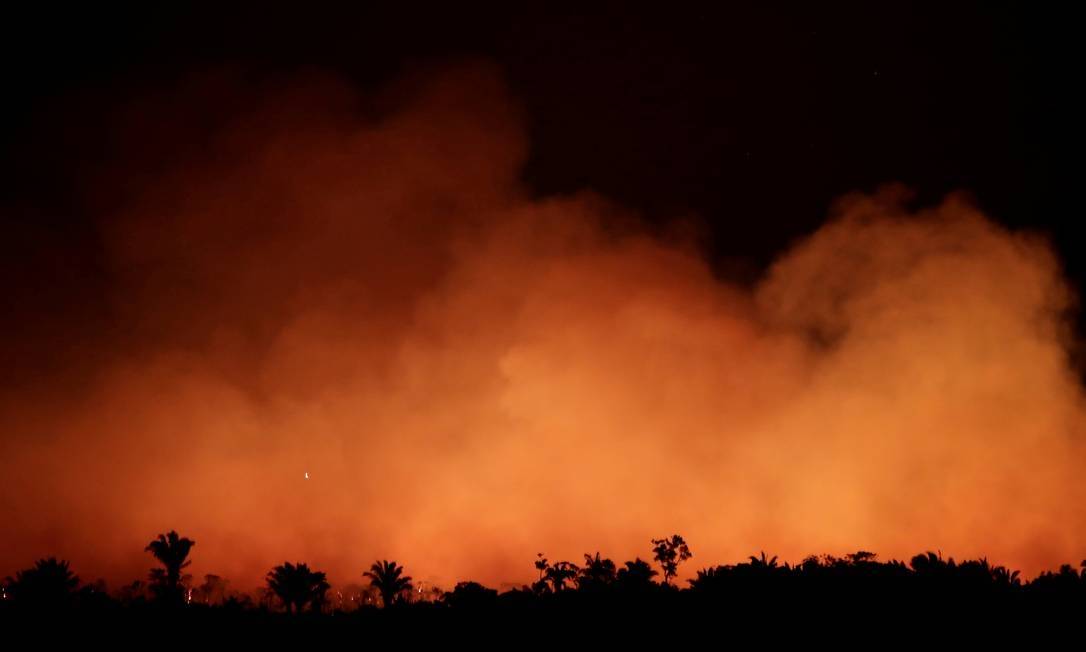
The reduction of efforts to combat logging, the manipulation of information on deforestation and fires, the indexes of which presented the worst scenario since 2010. The dismemberment of indigenous territories and public bodies, the significant decrease in inspection, the increase in loss of coverage of the Brazilian Amazon. With seven months in office, the environment portfolio was already controversial.
The major concern in this regard is that this bad reputation, which can cost billions, since this whole controversial and unstable scenario affects investor confidence and removes incentives and damages exports. In addition, there is a possible worrying scenario, where disregard for deforestation leads to a crisis in the country’s main economic pillar, which is agribusiness.
In view of the facts, the understanding is that it is not the image crisis that concerns, since, as time passes, the actions of the new government generate more doubts, reservations and losses and this is something that Brazil cannot afford. That is, it is not about the damage, but the dimension of it.
The greatest Brazilian heritage
When you we talk about deforestation and fires, it is important to highlight its relevance of the minor or major aspect of the problem, on the global priority scale. Treating these crimes efficiently avoids loss of property, various frauds and guarantees the preservation of the standing forest, which is what they defend as the richest in Brazil. However, according to the World Economic Forum, Davos 2020, for example, on a more global scale, all the attention in the world must be on climate change, the impact of which affects not only life, but the economy as a whole.
It was precisely the old environmental policy that kept sustainability on the agenda for 20 years and became a flagship in the list of factors that give confidence to negotiations and investments. Not surprisingly, Brazil holds 35% of the largest tropical forest on the planet, in addition to being greater in terms of biodiversity (land and fresh water), knowing how to take care of Brazilian lands and their natural resources can make the country consolidate itself. as the world power it can be.
From Brasil to the world
With publications in renowned vehicles, such as Nature, The Economist and The New York Times, the crisis in relation to the environment gained a direct flow from Brazil to the world:
- Nature: In its publication, Nature, for example, went from science to the environment, reporting cuts, attacks, freezes even the data released by INPE on the 25% increase in the rate of fires. He called the current president “tropical Trump” and said that Bolsonaro was the one who unleashed the country’s worst science crisis ever.
- The New York times published a thorough report on the destruction of the Amazon whose title was “Under the command of the far right of Brazil, as protections of the Amazon fallen and as forests fall”. The publication calls attention to actions against global warming and President Jair Bolsonaro’s statements about land in Brazil being “an obstacle”, saying he would open up that land for commercial exploitation.
- The Economist whose cover showed a log of deforested wood in the shape of a map of Brazil on August 1, 2019. The publication focused on measures to weaken enforcement, facilitation favoring deforestation and the proximity of the government to mining companies, which according to the vehicle is the death sentence for the Amazon.
As you can see, this is not a positive way to draw attention to the country.
Other controversies
One cannot fail in considering that the environment is one, among many causes of revolt and negative impact on the image of Brazil. Budget cuts in communication, attacks on institutions and research bodies to conceal information of public interest, unjustified dismissals, pressure on funds, the crisis in culture. The Bolsonaro government acts deliberately and scares experts, scholars, critics, businessmen and public opinion who assist management to deconstruct already consolidated trajectories and redirect the country towards an arbitrary capitalist strategy.
While all this is happening, the Minister of the Environment, Ricardo Salles supports the statement that the ministry has been working with a focus on urban problems and defends the thought that sustainability should bring financial returns, while announcing cuts, controversial provisional measures such as “MP grilagem ”and announces the creation of a Secretary for the Amazon.
Davos 2020
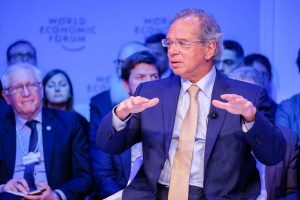
The Bolsonaro government’s stance is so clear as to its position in relation to the environment that the delegation for the edition of the World Economic Forum held in January, Davos 2020 – whose central theme was sustainability – was led by the Minister of Economy, Paulo Guedes. Apparently, the focus was to “sell” Brazil, announcing GDP growth forecasts questioned by experts and representatives of the international media. The Minister declared that “the worst enemy of the environment in Brazil is poverty”.
The information is plentiful and all in the process of approval, debate, discussion. 2020 arrives showing that the challenges for a positive economic and environmental policy will be many. Now, reflecting on Brazil’s reputation, not only in relation to the environment, but as a democratic and developing country, is a role for companies and organizations. Keeping a close eye on the evolution of all these scenarios and being attentive to everything that takes the country off the path of sustainable and fairer growth is everyone’s task.