The Amazon is responsible for about 20% of all fauna diversity on the planet. Recognized for its exuberant biodiversity, there are around 45 thousand species of plants and vertebrate animals.
With a territory of 7 million square kilometers, of which more than 5.5 million kilometers are covered by tropical forest, the Amazon has already been considered by the United Nations Educational, Scientific and Cultural Organization as a World Heritage Site.
There are about 378 species of reptiles, 427 mammals, 428 amphibians, 1,300 birds, 3 thousand fish and 2.5 million insects. With this large number of species, it would be impossible to list each one here, so we will bring some that are exclusive to the Amazon, the largest tropical forest in the world!
Meet some of the animals that exist only in the Amazon
- Boto – Brazilian Pink dolphin

Well known, mainly due to folk legends, the pink dolphin is one of the most famous representatives of the Amazon. This is the largest freshwater dolphin, its pink coloration is more prominent in males, it feeds mainly on fish, complementing it with turtles and crabs. It is one of the species of dolphins most kept in captivity, having a high mortality rate in these places.
- Blue-throated macaw
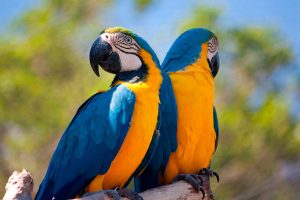
In the 1980s, it was believed that this species had been extinct, but 50 birds of the species were found in Bolivia in 1992. The species is today a cultural heritage of the country. The turquoise blue feathers cover the crown, the back of its wings and tail and, of course, the throat, the origin of its name. In addition, it has yellow gold patches on other parts of the body. There are currently around 400 individuals in the wild and the biggest threat remains capture for the illegal animal trade.
- Brown titi monkey (zogue-zogue)
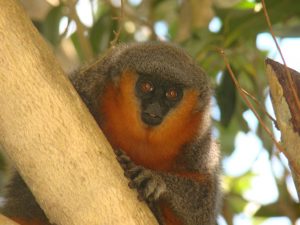
Another endemic species of the Amazon, the small brownish gray monkey, is also threatened with extinction. This is due to the sale on the black market and the destruction of their habitat. Primates are grouped into three genera, classified according to their geographic distribution and can measure up to 60 cm in length. Titis are almost exclusively arboreal, that is, they need forest cover to survive.
- Little lion marmoset
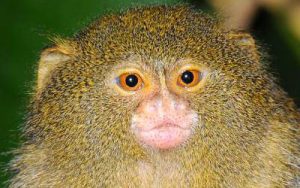
This is the smallest species of monkey in the world, an adult measures 12 to 15 cm (excluding the tail), weighing about 100 g. They live at the top of the treetops and only 25% of the chicks reach adulthood. The ape is also hunted and sold illegally as a pet, another threat to the species is the attack on its habitat.
- Cock-of-the-saw
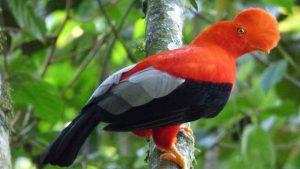
Measuring up to 28 centimeters in length, females are olive gray and males have a bright orange color that draws a lot of attention. Despite being frugivorous (that is, it consumes mainly fruits), they also hunt insects, frogs and geckos.
- Otter

The otter is the largest species in the otter’s subfamily and can measure up to 2 meters in length. Known for being affectionate and loud, they are found in remote parts of the Amazon and are constantly threatened due to the destruction of their habitat and by hunters who are looking for their fur, which is thick and has a velvety texture.
- Pirarucu

Being one of the largest rivers’ and lake’s freshwater fish in Brazil, pirarucu can reach up to three meters, thinking up to 200 kg. Found in calmer, clear and slightly alkaline waters. Because they are closer to the water’s surface, it is much easier to catch with a harpoon, overfishing being its main threat.
- Green anaconda
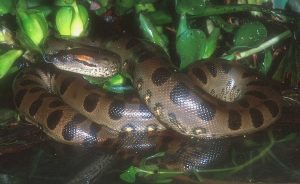
Found in flooded areas, where there is abundant prey such as alligators and capybaras, the anaconda can exceed five meters in length, being the largest snake in the world in terms of weight and can exceed 90 kilos. To dominate its prey, it surrounds its target and swallows it whole, even animals as large as jaguars. They are faster in the water and, outside, get more aggressive in order to protect themselves.
- Uacari
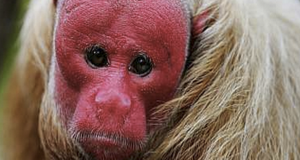
This is one of the mammals that live exclusively in the Amazon River basin. The absence of hair in the region of the face is not the only thing that distinguishes it, this species also has another peculiar characteristic: its tail is extremely short, being less than half its body length. This is another endemic species of the Amazon which is also endangered.
- Wire tail
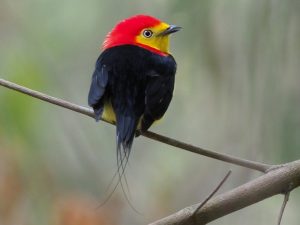
Another species of bird endemic to the Amazon rainforest is the wire tail, the plumes of its head look like a red hood. One of the best-known things about him is the fact that his mating dance is one of the most elaborate in the world, becoming known even as “thin-tailed dancer”. Difficult to be observed, it lives at the bottom of humid and lowland forests.
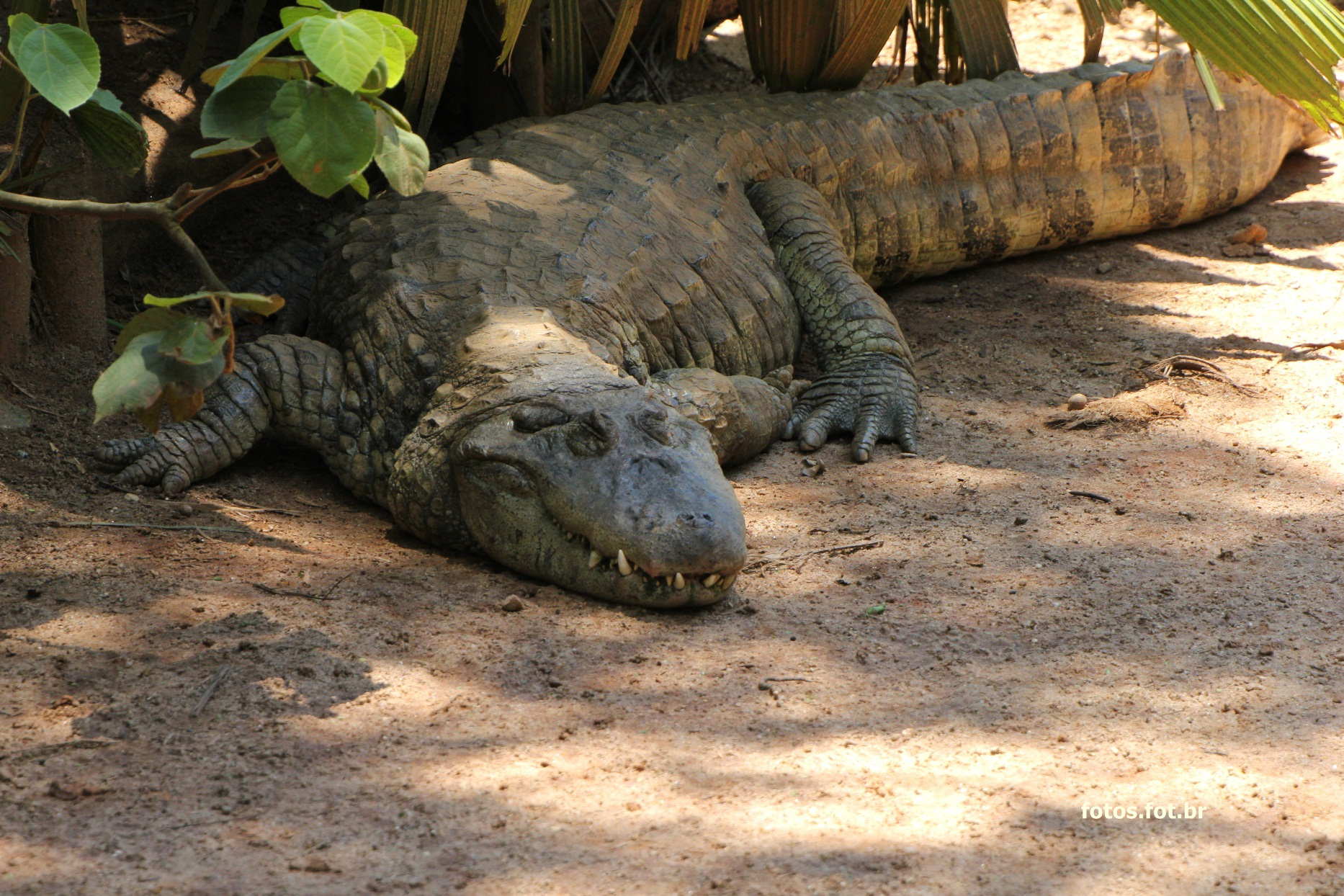
- Jacaré-açu
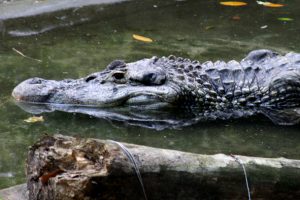
At the top of the food chain, the alligator-açu is a predator that even part of its diet being composed of fish, capybaras, deer, turtles, can still attack any other predator such as: pumas, jaguars, boa constrictors and anacondas. The high value of its chorus in the illegal market almost led to its extinction, but, currently, the population is already stable in Brazil, thanks to the support that exists today for its protection.
These are some of the species that are found only in the Amazon, after all, this is a vast territory and quite rich in diversity of fauna and flora. We know that the Amazon rainforest represents more than half of the planet’s remaining tropical forests. In addition, the region includes territories belonging to nine countries, with the majority (60%) being in Brazil, followed by Peru with 13% and the other smaller parts are in Venezuela, Bolivia, Colombia, Ecuador, Guyana, Suriname and France (French Guiana).
Even showing only a few animals here, it was possible to see how human actions the main culprits for the extinction and destruction of the homes of thousands of species and the population of individuals are. Deforestation, fires, illegal hunting, fishing vessels, disregard for environmental policies and pollution are some of the attitudes that lead all this diversity to decline. Therefore, it is necessary that more and more people support and are active participants in the preservation of this immense tropical forest.