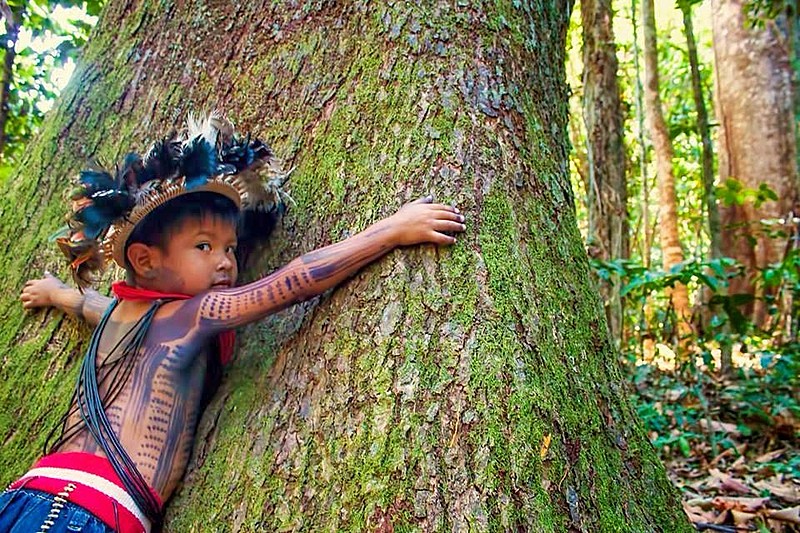
It is not only in the Brazilian part that the Amazon has been losing its forest area. The damage has been enormous in an area spanning nine countries. Over 33 years (1985-2018), Pan-Amazônica lost 724 thousand km² of forest and vegetation cover between. The data are from MapBiomas Amazônia, released in early July.
To have an idea of the size of the lost territory, the deforested area is the sum of the states of Santa Catarina, Paraná, São Paulo, Rio de Janeiro and Espírito Santo, or the entire territory of Chile. The affected area covers Brazil, Bolivia, Peru, Ecuador, Colombia, Venezuela, Suriname, Guyana and French Guiana.
Of the 724 thousand km² of affected area, more than 692 thousand km² are forestry. The data shows that in 2018 there was 10% less forest in the Pan-Amazon than in 1985.
Pan-Amazônica has a total area of 8.47 million km². With the highest concentration of the Amazon biome (61.8%), Brazil was the country that lost most forest cover in this 33-year period. 624 thousand km² were lost. Then appear:
- Bolivia, with 36 thousand km²;
- Peru, with 16 thousand km²;
- Colombia, with 14 thousand km²;
Unlike these countries mentioned, Guyana and Suriname gained forest coverage, with 1,700 km² and 600 km², respectively.
Agriculture and Livestock
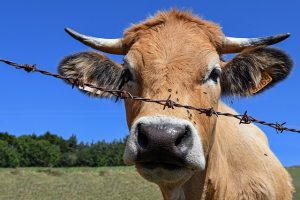
Coincidentally, while the forest area was reduced, agriculture and livestock were gaining ground. The increase was 172% between 1985 to 2018.
According to MapBiomas Amazônia, in 1985 there were 415 thousand km² with agricultural activities across the Pan-Amazon. In 2018, the area reserved for the sector almost tripled to 1.12 million km². The advance was greater in the Brazilian territory. In 1985, the country had 319 thousand km² of land for agriculture. In 2018, there were 960 thousand km².
See the advances in agriculture in the Brazilian Amazon:
- In 1985, there were 319,150 km²;
- In 1990, there were 389,481 km²;
- In 1995, there were 515,294 km²;
- In 2000, there were 639,412 km²;
- In 2005, there were 784,219 km²;
- In 2010, there were 850,100 km²;
- In 2015, there were 895,039 km²;
- In 2018, there were 960,549 km²;
Invasion of indigenous territory
With the growth of agricultural and livestock activities, conservation areas and indigenous territories are the most affected. Illegal exploitation of natural resources has destroyed the forest biome in areas that should be preserved.
Of the 692 thousand km² of lost Amazon forest, 50 thousand km² were in indigenous territories and protected natural areas. This puts native forests and hardwood at risk. Increased logging fuels the illegal trade, which is headed by loggers and land grabbers. Conservation areas have the role of preserving the forest, but the lack of supervision and more severe punishments favor environmental crime.
Even with the advances made by loggers and land grabbers in the conservation areas and in the indigenous territories, MapBiomas Amazônia found that between 1985 and 2018, 1% of forest cover in the protected regions was lost. In the areas outside the protected areas, there was a loss of 20%.
Unregistered public land
Studies by Instituto Pesquisa Amazônia (Ipam) and the Federal University of Pará (UFPA) found that 23% of the Amazon rainforest on public lands was registered illegally as private property. This occurs when the land is not intended as a protection unit, quilombola area or indigenous territory.
In total, the Amazon has 49.8 million hectares of forests without destination. Of these, 11.6 million hectares of public forests were taken over 21 years (1997-2018).
When the public authorities do not allocate their land, land grabbers and loggers feel free to invade the areas and to deforest large forest areas. To achieve their objectives, the invaders also increase the fires in order to make space for pasture and cattle, giving the appearance of a productive area.
When lands are declared productive, invaders access the Rural Environmental Registry (CAR) to declare the property as private. Registration is self-declaration. Just enter the system, register the georeferencing of the land and declare yourself the owner.
In accordance with government regulations and environmental legislation, the environmental record must be validated after inspection. However, there is a long delay in the process, facilitating the action of criminals. Slowness favors the sale of land as if it were regularized, becoming a vicious circle.
Environmental entities argue that one of the solutions to reduce deforestation on public lands is to allocate them to the indigenous population or for the sustainable use of natural lands, as mandated by the public forest law of 2006. When the destination does not occur, grileiros feel free to act, devastating large forest areas.
Benefit attackers
Last year, to benefit invaders of public lands, the Federal Government issued Provisional Measure 910/2019. The MP intended to streamline processes and regulate land use in the country. The controversial text was not approved by the National Congress.
According to the executive director of the Instituto Pesquisa Amazônia (Ipam), Paulo Moutinho, the government’s proposal opened a gap to regularize large areas of the Amazon, and not just small rural properties.
“The impasse around the size of the areas was the main impasse for the approval of the MP, which can be regularized by self-declaration, without undergoing inspection,” said Moutinho.
According to information from Ipam
- 49.8 million hectares of forests in the Amazon have no destination;
- Land grabbers took 11.6 million hectares of public forests;
- The number of hectares taken by grileiros represents 23% of the non-destined forests;
- The forests that form part of public non-destined lands should be defined as a conservation unit, quilombola area, or indigenous lands. Thus, there would be a significant reduction in deforestation and illegal land tenure;
- When the land grabbers enter “private property” in the Rural Environmental Registry (CAR), they sell the land as if it had been regularized. Most of the time, new owners are unaware that the terrain is uneven.
Enquanto o atual governo não se preocupar com a conservação florestal, será difícil conter ações de grileiros e madeireiros.