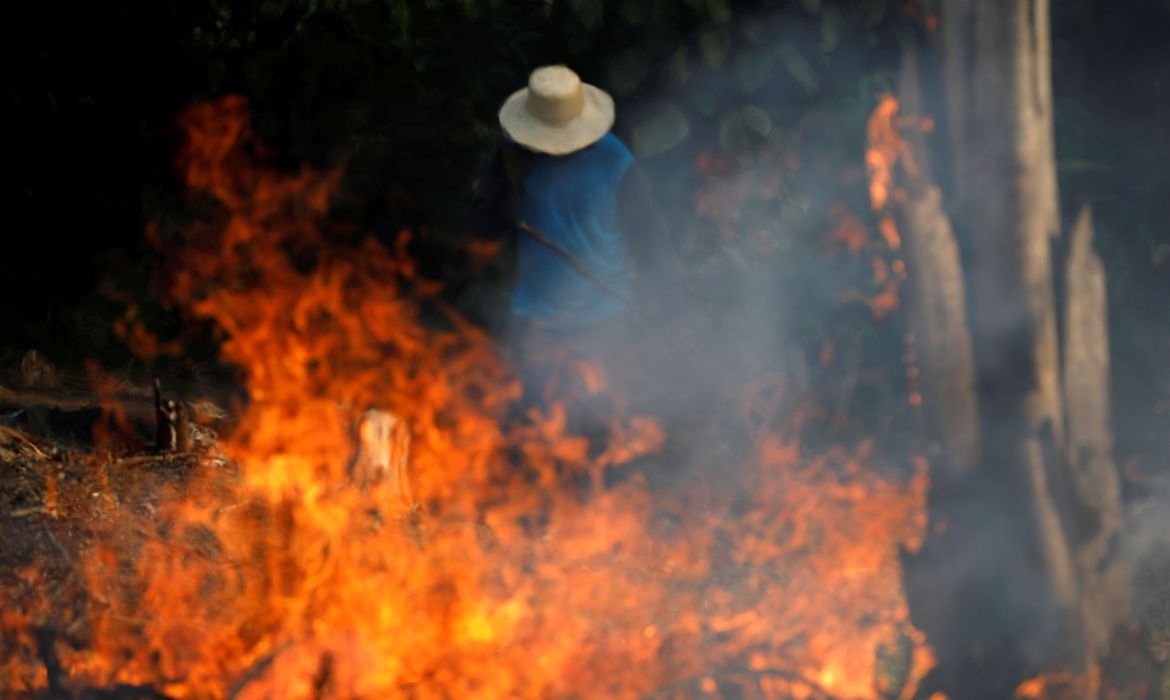
The year 2020 will be no different than 2019 when it comes to burning in the Amazon rainforest, at least the experts say. Several factors contribute to this sad finding and the main one is the action of man.
At the Climate Conference (COP25), organized by the UN in Madrid, the Brazilian government received harsh criticism from organizations such as Greenpeace and from heads of state in several countries for not investing in actions to combat deforestation and fires. Instead, the country encourages the installation of hydroelectric and mining companies on indigenous lands and for environmental protection.
Researchers and experts make the worst predictions for the Amazon this year, as there are plans for the government to legalize areas illegally occupied by farmers.
In addition, the region must be open to economic exploitation, facilitating the sale of land to foreign investors. As a result, 67 protected areas may have lowered protection status. Another governmental measure was to subsidize the planting of sugar cane. Meanwhile, resources from inspecting agencies, such as Funai, have been cut.
Important for the Planet
Brazil can do a lot for the climate if it is preserved. The country is home to two thirds of the 7 million square kilometers of the Amazon Rainforest, the largest tropical forest in the world and has a gigantic CO2 repository.
When the forest is cleared and suffers from burning, 200 million tons of stored carbon is released into the atmosphere every year, contributing to the greenhouse effect.
Discover other advantages of preserving the forest:
- Variety of animal species.
- Herbal medicines.
- Water and climate control carried out through rivers.
- Carbon stock to control the greenhouse effect.
- Transfer of heat and steam to other regions.
- Rain control.
- Diversity of plant and mineral resources, used by the industries: pharmaceutical, food and cosmetics.
But the benefits of the Amazon do not stop at these points, they go beyond what we imagine or know. Therefore, researchers from all over the world are studying the beneficial effects of the region for the world.
What is known is that the forest has several resources in abundance and functions as a great reactor for the balance of the environmental stability of the entire planet. Vegetation is responsible for releasing about 7 trillion tons of water into the atmosphere, known as evapotranspiration. The Amazon River drains 20% of fresh water into the Atlantic Ocean each year.
Climate changes
Not only will human actions cause fires in the Amazon, climate change will contribute a lot to this bleak scenario. This only occurs because of deforestation, consuming 16% of the biome in the region by 2050. The devastating effect occurs because the internal humidity in the forest decreases when there is deforestation, making the region drier and more prone to fires.
The forecast is from researchers at the University of California and the Environmental Research Institute of the Amazon (IPAM).
In 2019, the number of fires was already frightening, in 2020 the trend is getting worse. To give you an idea, last year was the third with the highest number of fires recorded by the National Institute for Space Research (Inpe), since the beginning of this type of measurement in 1988.
Check the numbers:
- 2015: 106,438 fires.
- 2017: 107,439 outbreaks of fires.
- 2018: 68,345 fires.
- 2019: 89,178 fires.
The burnt areas in the Amazon region damage the fauna and flora that have difficulties in recovering, which may alter the vegetation characteristics.
Burnings in 2020 tend to reach protected areas
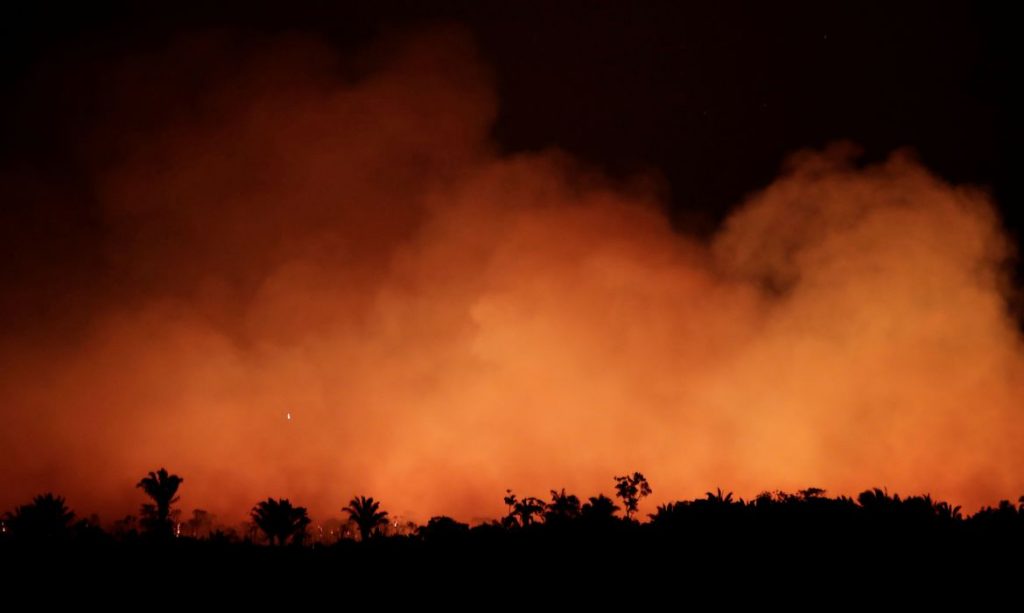
Policies adopted by the government encourage land invasion and increase the chances of burning in Environmental Protection Areas (APA) and indigenous lands.
Most of these actions are carried out by land grabbers, miners and loggers who work illegally in the region, taking advantage of the precarious inspection and impunity.
Incentive to mining
Mining is one of the economic activities that most damages the fauna and flora of the forest. It is a constant threat to the Indians and their lands. But it is precisely for this activity that the Bolsonaro’s government announced support. The justification is to boost economic growth in the region. The plan is to release indigenous reserves for foreign mining companies. Mining will not be the only beneficiary. Hydroelectric dams and large-scale agriculture each received their share of the territory reserved for the Indians.
The measure violates the Federal Constitution by removing the right of Indians to land and contributes to environmental crime never seen in the history of the Amazon.
Amazonian Funds
With the increasing fires, the Amazon lost resources from Norway, which are part of the Amazon Fund. For 10 years, the Norwegian country invested 1.2 billion reais in the fund in order to contain deforestation and fires. The resources were also invested in public environmental policies, of awareness and preservation of the biome.
Norway decided to suspend the transfers after the Brazilian government tried to change the investment rules of the Amazon Fund and after disclosures of projects contrary to the preservation of the largest tropical forest in the world.
Deforestation control
To keep the Amazon preserved, the researchers agree that controlling deforestation is essential to reduce burning and CO2 emissions into the atmosphere. There is no other way.
Fires destroy several species of vegetation that serve as raw material for medicines and cure or control various diseases, including cancer, hypertension, depression and diabetes.
Avoiding further deforestation is the beginning of reducing at least half of the fire emissions. The action can also prevent outbreaks of fires in areas of environmental conservation and in indigenous reserves.
Experts believe that international pressure has helped the Amazon to survive. If it were not for the actions of European countries that demand a position of the Brazilian government in guaranteeing the survival of the forest, the data on deforestation and fires would be even more frightening.
According to analysts, what has weighed most are the threats of economic sanctions against Brazil, if preservation is not taken seriously. Unfortunately, the actions of countries like France, Germany and Norway are necessary to keep the Amazon alive.